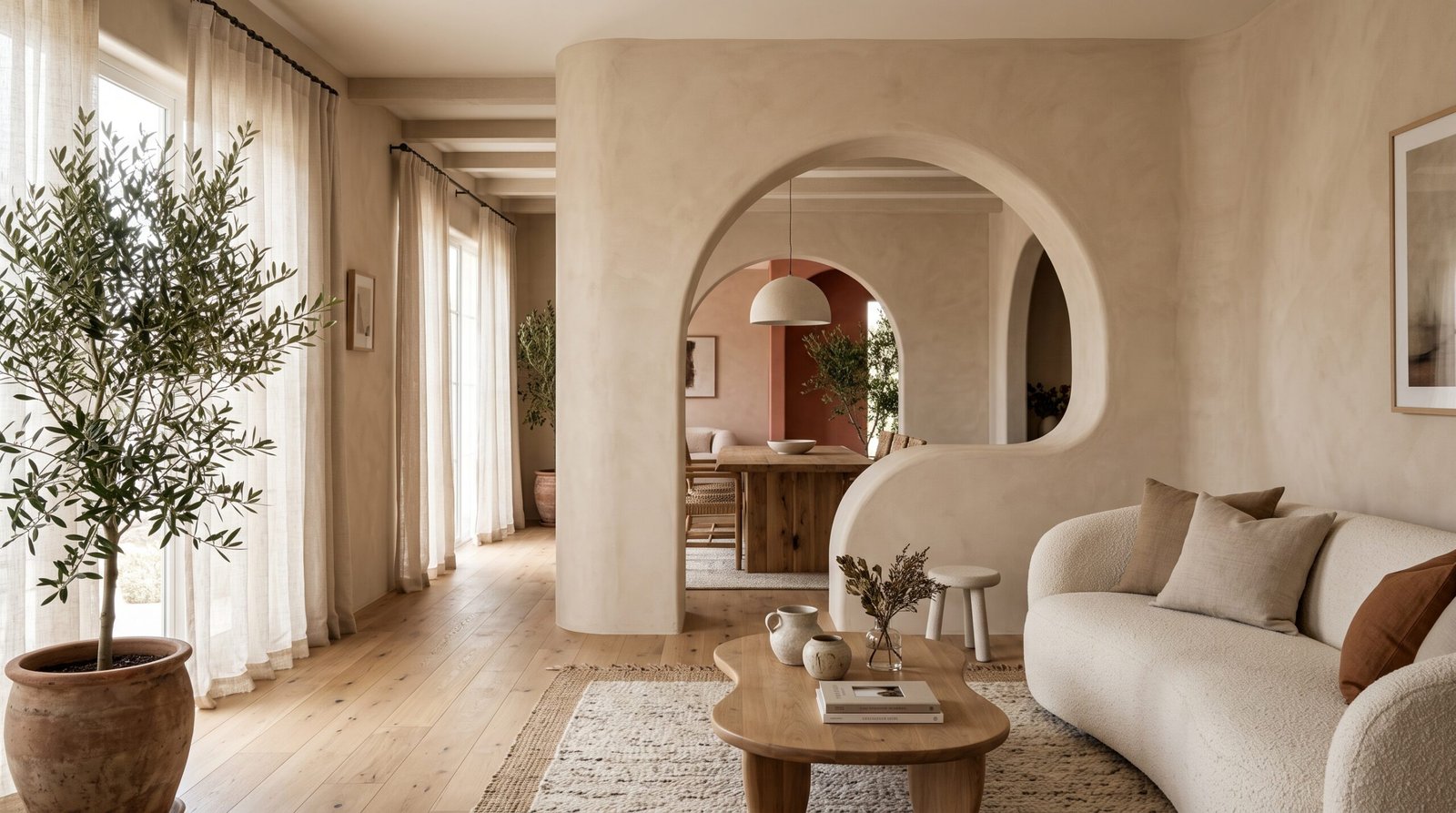
Interior Half Wall Ideas: 15 Stylish Ways to Divide a Space Without Closing It Off
Also known as pony walls or partial walls, half walls provide definition while allowing light, conversation, and visual connection to flow between spaces. Unlike traditional walls, they don’t necessarily make a room feel smaller. In fact, when designed carefully, a half wall can become one of the most interesting architectural features in your interior.
Modern half walls go far beyond simple drywall partitions. They can incorporate warm wood, glass panels, vertical slats, built-in shelving, decorative molding, stone surfaces, planters, lighting, and even functional storage.
Whether your home is modern, Scandinavian, organic contemporary, traditional, or minimalist, there are plenty of ways to turn a basic partial wall into a beautiful design feature.
Here are 15 interior half wall ideas to inspire your next home transformation.
1. Create a Simple Modern Half Wall
One of the easiest approaches is also one of the most timeless: a clean, simple half wall painted the same color as the surrounding interior.
A minimal half wall works particularly well when you want architectural separation without introducing another strong material or decorative element. For example, a partial wall between a living room and dining area can subtly tell the eye where one zone ends and another begins.
Warm white, cream, soft greige, or light beige keeps the partition visually quiet. Instead of looking like an obstacle, the half wall becomes part of the architecture.
Consider finishing the top with a slightly wider wood or stone cap. A natural oak ledge adds warmth to an otherwise neutral room, while marble or quartz can create a more polished appearance.
Keep the surface mostly uncluttered. One small ceramic vase, sculptural bowl, or trailing plant may be enough.
A simple design like this is especially effective in smaller homes because it creates definition while preserving an open feeling.
2. Add Vertical Wood Slats Above a Half Wall
If a standard pony wall feels too plain, extend the design upward with vertical wooden slats.
This combination offers the best of both worlds. The solid lower portion provides separation, while the slatted upper section maintains visibility and allows natural light to travel through the room.
Light oak works beautifully in Scandinavian and organic-modern homes. Walnut can create a richer, more dramatic effect, while medium-toned wood provides warmth without becoming overly dominant.
Spacing matters. Narrow gaps create greater privacy, while wider spacing produces a lighter, airier appearance.
You can run the slats all the way to the ceiling, creating the impression of a complete partition without actually closing the room.
This idea works particularly well between an entryway and living room, dining and lounge areas, or beside a staircase.
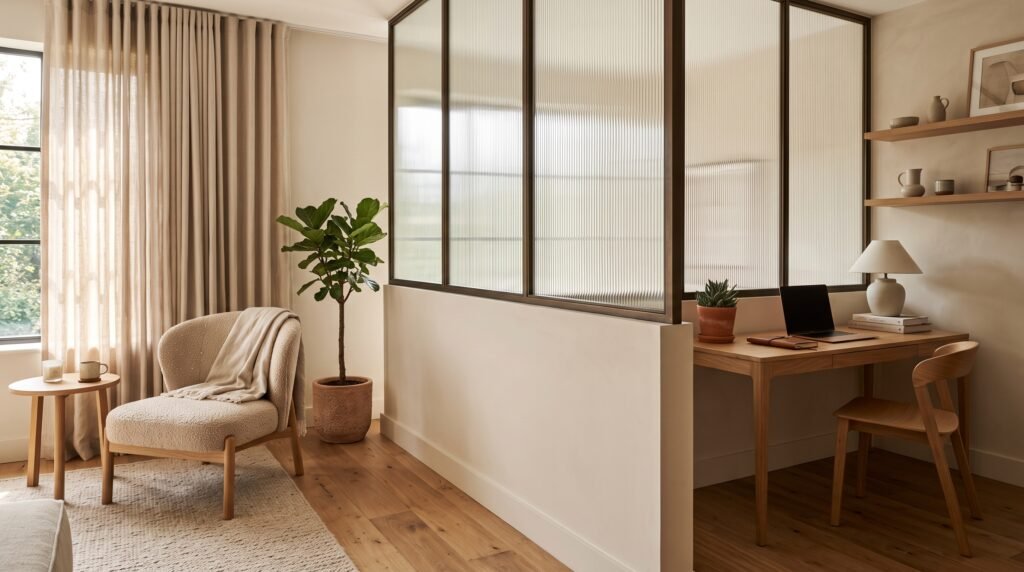
3. Use a Glass-Topped Half Wall
Glass is another excellent way to extend a half wall without sacrificing light.
Start with a solid lower wall and install a framed or frameless glass panel above it. The result feels contemporary and architectural while creating considerably more separation than an ordinary pony wall.
Fluted or reeded glass is particularly attractive when privacy is important. It diffuses the view while allowing daylight to pass through.
Clear glass, meanwhile, creates almost no visual interruption.
Black-framed glass suits industrial and contemporary interiors, while thin bronze or brass frames can bring warmth to more luxurious spaces.
This approach can be especially effective near staircases, home offices, dining rooms, and entrance areas.
4. Turn Your Half Wall Into Built-In Shelving
Why allow a partition to serve only one purpose?
A half wall can become valuable display or storage space by incorporating open shelving.
Instead of building a completely solid structure, create cubbies or open compartments where books, ceramics, plants, and decorative objects can be displayed.
For a clean look, use only a few carefully selected items. Negative space between objects keeps the shelves from becoming visually heavy.
Built-in shelving can be particularly helpful in smaller homes where every square foot needs to work harder.
You could use the living-room-facing side for decorative pieces while adding concealed cupboards to the opposite side.
That gives you attractive styling on one side and practical storage on the other.
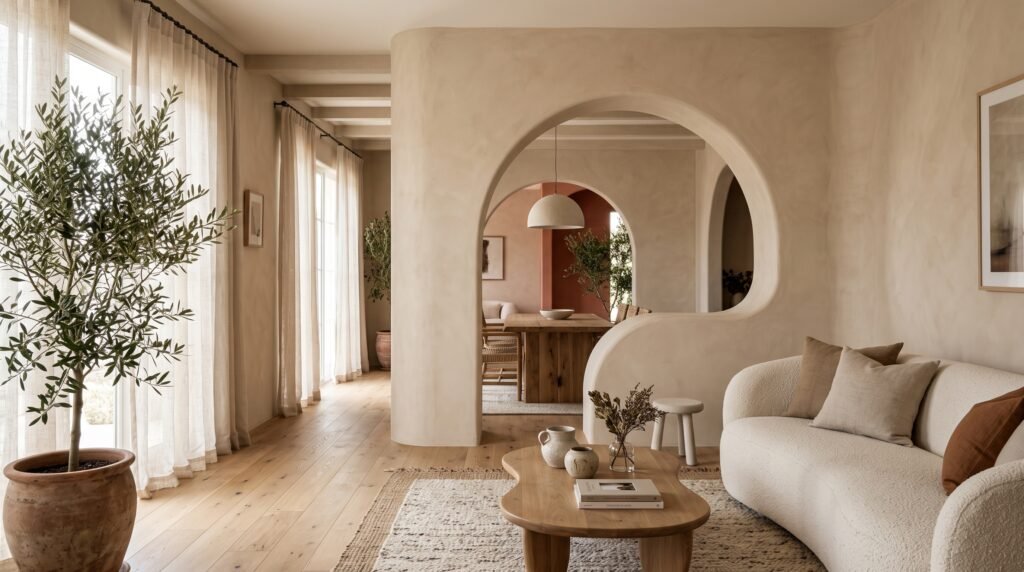
5. Design an Arched Half Wall
Curves can immediately soften a room dominated by straight architectural lines.
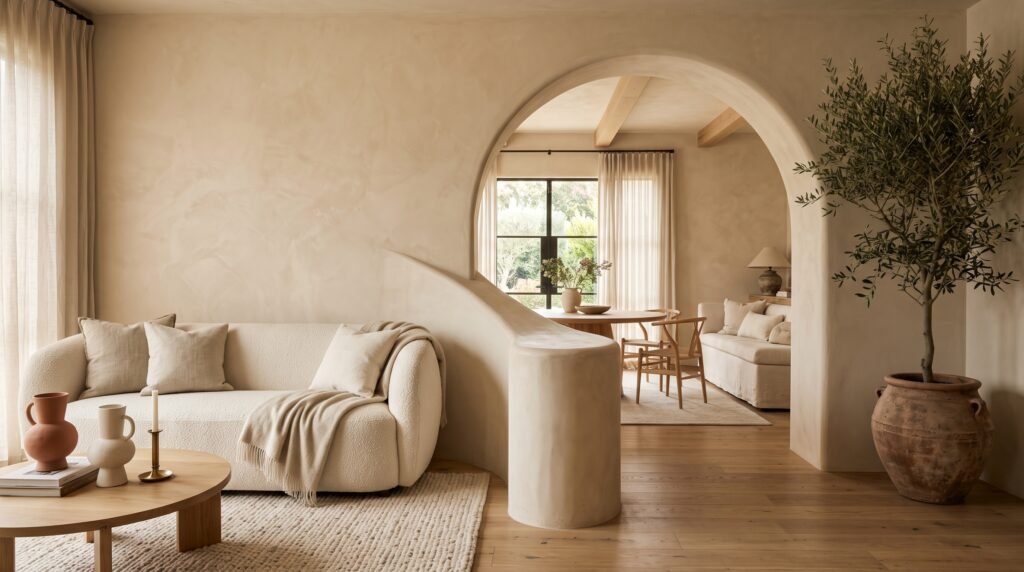
An arched half wall combines the functionality of a partition with the character of a custom architectural feature. Rather than finishing the partition with a standard rectangular opening, introduce a soft curved or arched detail.
This works particularly well in Mediterranean, organic-modern, contemporary, and transitional interiors.
Keep the wall plastered in warm white or beige for a soft sculptural appearance. Pair it with natural wood flooring, linen fabrics, textured rugs, and understated furniture.
The curved shape becomes decorative on its own, meaning you don’t need to cover it with additional accessories.
For an even softer look, rounded corners can be incorporated along the outer edge of the partition.
6. Add Decorative Wall Paneling
A half wall doesn’t need to disappear into the background.
Decorative paneling can transform it into a subtle statement feature.
Picture-frame molding is perfect for traditional and transitional interiors. Thin rectangular moldings painted the same color as the wall provide depth without making the room overly ornate.
For a more contemporary look, try narrow vertical panels or fluted detailing.
You could also introduce natural wood paneling for contrast.
If the surrounding walls are warm white, for example, an oak-clad half wall creates a beautiful visual anchor.
The important thing is to keep the design connected to the rest of the room. Repeat similar wood tones, colors, or molding styles elsewhere so the partition feels intentional.
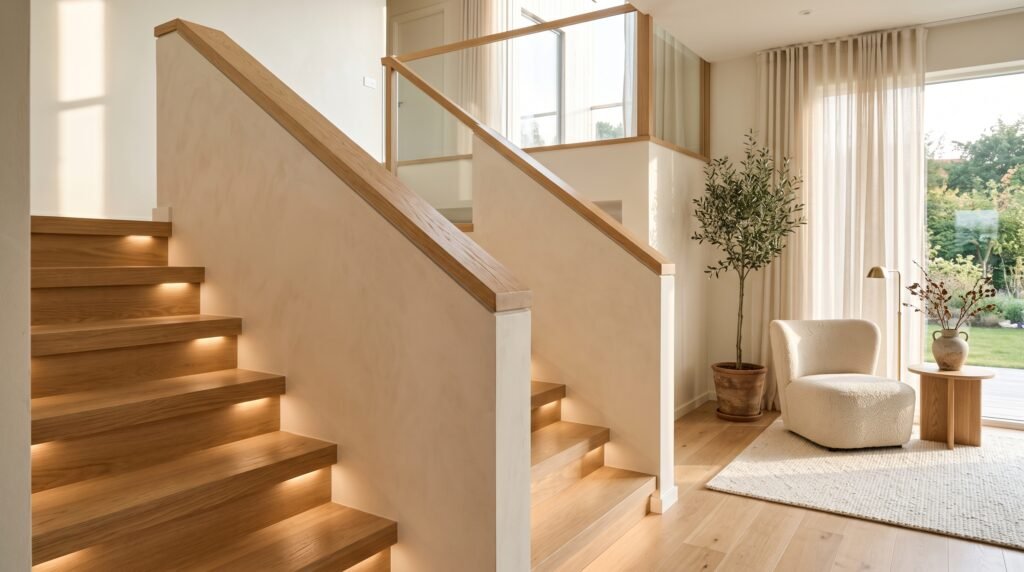
7. Use a Half Wall Beside the Staircase
Staircases are one of the most natural places to introduce a half wall.
Instead of a traditional railing, a solid pony wall can provide a clean architectural edge along part of the staircase.
This design feels especially appropriate in minimalist homes where simple forms are preferred over decorative balusters.
The top can be finished with wood to coordinate with stair treads or nearby flooring.
Alternatively, combine the half wall with glass above it for additional safety while maintaining an open visual connection.
Lighting can make this feature even more attractive. Small recessed wall lights installed along the staircase create a warm glow during the evening and emphasize the wall’s architectural shape.
8. Create an Entryway Half Wall
Many modern homes open directly into the living room without a defined foyer.
A strategically positioned half wall can create the feeling of an entryway without sacrificing openness.
Place the partition perpendicular to the entrance so that visitors don’t immediately step into the main seating area.
The living-room-facing side can remain simple, while the entrance side can become functional.
Add a narrow console ledge, hooks, small shelving compartments, or even concealed shoe storage.
A mirror above or beside the partition can make the entrance feel brighter.
For a warmer look, finish the top with natural oak and style it with a small ceramic vase or sculptural object.
This small architectural addition can dramatically improve the way an open floor plan feels.
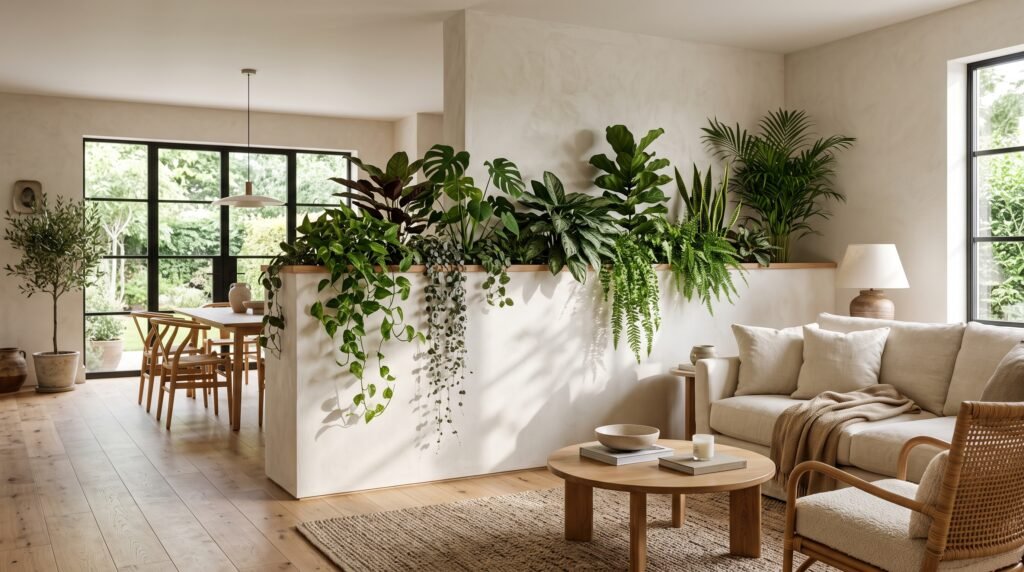
9. Combine a Half Wall With an Indoor Planter
Plants can turn a structural divider into a living decorative feature.
Build a wide ledge into the top of your half wall and use it to display a collection of greenery.
For an even more integrated look, incorporate a recessed planter directly into the wall.
Choose plants with varying heights and shapes. Upright foliage provides gentle privacy, while trailing greenery can soften the hard architectural edge.
Keep the planter design relatively simple so it doesn’t overwhelm the space.
A neutral plaster wall topped with lush greenery creates a particularly beautiful contrast in organic-modern interiors.
Just make sure the location receives appropriate natural light for the plants you choose.
10. Try a Fluted Wood Half Wall
Fluted surfaces have become popular because they add texture without relying on bold colors.
Covering the visible face of a half wall with narrow wooden fluting creates warmth, rhythm, and architectural interest.
Light oak creates a relaxed Scandinavian appearance, while walnut produces a richer, sophisticated look.
You don’t necessarily need to cover every surface. Fluting the main front face while leaving the remaining surfaces smooth can create a balanced result.
Add a slim stone or wood cap along the top for a finished appearance.
This design is particularly attractive in living rooms, entryways, dining spaces, and around staircases.
Pair it with simple furniture and soft neutral textiles so the texture of the wood remains the focal point.
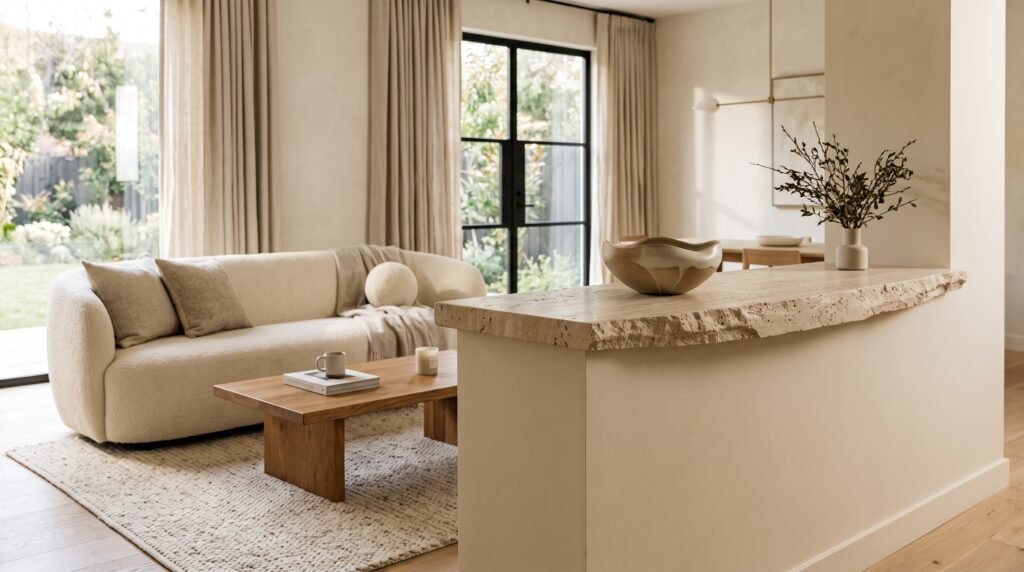
11. Add a Marble or Stone Top
Sometimes the smallest material upgrade makes the biggest difference.
Adding a beautiful stone cap to a simple half wall can immediately make it feel more intentional and luxurious.
Marble offers natural veining and timeless elegance, while travertine brings warmth and subtle texture.
Quartz is a practical choice if durability and easy maintenance are priorities.
Allow the stone to extend slightly beyond the wall edges for a clean architectural finish.
In contemporary spaces, you can even create a waterfall-style detail where the stone continues down one end of the partition.
Keep the styling restrained. A sculptural ceramic bowl or a small arrangement of branches may be all the surface needs.
12. Build a Half Wall Between Living and Dining Areas
Living and dining areas often share one large open space.
While this layout encourages connection, the two areas can sometimes visually blend together too much.
A half wall offers a simple solution.
Position it where the dining zone transitions into the seating area. Because the partition doesn’t reach the ceiling, both spaces continue to benefit from shared light and sightlines.
You can strengthen the distinction by changing other subtle design elements as well.
For example, use a large textured rug to define the living area and a statement pendant above the dining table. The half wall then becomes part of a broader zoning strategy.
For a cohesive appearance, repeat materials on both sides. If the dining table is oak, an oak cap on the partition can visually connect the two spaces.
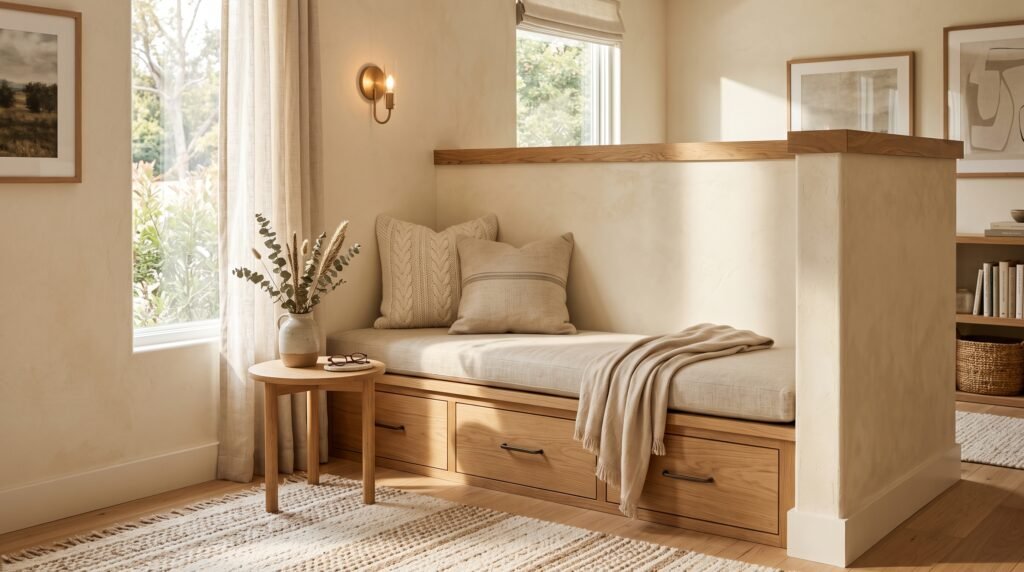
13. Create a Half Wall With a Built-In Bench
A partial wall can become surprisingly functional when combined with seating.
Build a bench against one side of the partition to create a cozy breakfast nook, reading corner, or casual seating area.
The wall provides a natural backrest and helps the seating zone feel protected without being enclosed.
Add a fitted cushion in linen or another durable neutral fabric. A few textured pillows can make the bench comfortable while maintaining a sophisticated look.
Under-seat drawers or lift-up compartments provide additional hidden storage.
This is an excellent solution for compact homes where furniture needs to perform more than one function.
14. Combine Half Walls With Columns
Some interiors already have structural columns that cannot easily be removed.
Rather than treating them as awkward obstacles, connect them with a half wall.
This turns separate architectural elements into one intentional feature.
The wall can run between two columns or extend outward from a single column to define a particular zone.
Keep everything painted the same color if you want a seamless architectural effect.
Alternatively, wrap the column in wood and repeat the same material along the half-wall cap.
This approach works especially well in large open-plan homes where a little extra visual structure can make the layout feel more organized.
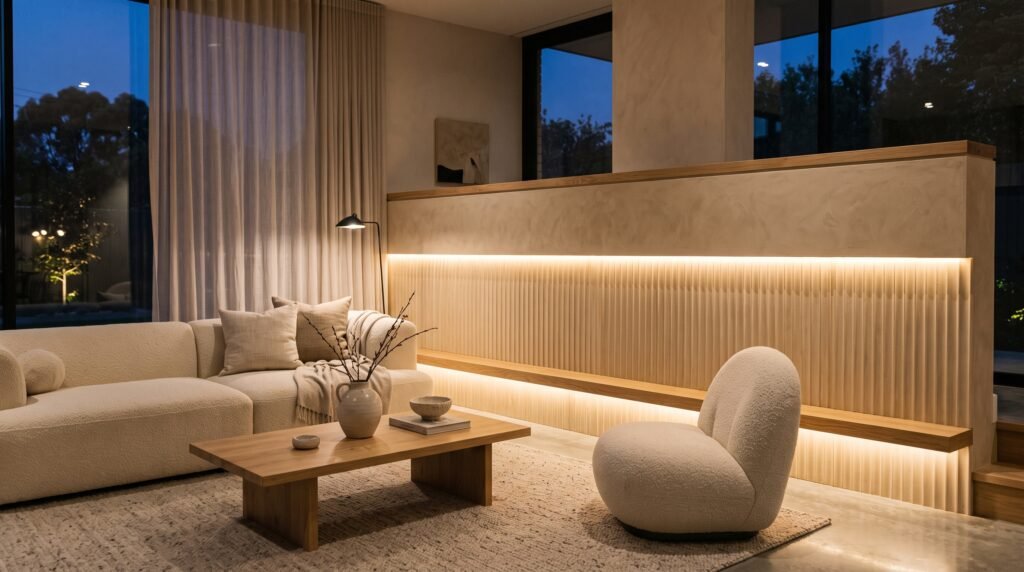
15. Create a Statement Half Wall With Lighting
Lighting can transform even a simple partition after sunset.
Instead of relying solely on overhead lights, integrate subtle illumination directly into your half wall.
A concealed LED strip underneath a wood or stone ledge can produce a soft floating effect.
Small recessed lights can highlight textured plaster, decorative molding, or fluted wood.
If the wall includes niches, individual spotlights can illuminate ceramics or artwork displayed inside them.
Choose warm lighting rather than harsh cool-white illumination. Warm light complements natural wood, cream walls, stone, linen, and other materials commonly used in cozy modern interiors.
The goal should be subtle atmosphere rather than dramatic brightness.
How to Make an Interior Half Wall Look Intentional
One of the biggest concerns with pony walls is that they can sometimes look like leftover architecture rather than a deliberate design decision.
The solution is to connect the wall visually to the rest of the interior.
Start with materials.
If your home contains warm oak furniture, consider repeating oak on the half-wall cap or paneling. If stone is already present on a fireplace or coffee table, a similar stone surface can create continuity.
Color is equally important.
Painting the half wall the same warm neutral as surrounding walls creates a seamless appearance. Alternatively, a slightly darker tone can turn the partition into a controlled accent.
Pay attention to proportions too.
A wall that is too short may feel insignificant, while an unnecessarily tall wall can defeat the purpose of keeping the room open. The right height depends on the function of the partition and the sightlines you want to preserve.
Finally, consider what people see from both directions. A half wall often sits between two rooms, so both sides should feel finished.
Where Do Interior Half Walls Work Best?
Half walls can be useful in almost every part of a home, but they are particularly effective in open layouts.
An entrance is one of the best locations because the wall can create an instant foyer. In living and dining rooms, it can provide visual zoning without blocking conversation.
Around staircases, half walls offer architectural definition and can sometimes replace portions of conventional railing systems, depending on local safety and building requirements.
They can also work around home offices, reading corners, play areas, breakfast nooks, and transitional spaces.
Even bedrooms can benefit from partial partitions. A half wall may separate a sleeping area from a dressing zone or create subtle division in a large primary bedroom.
The key is to use the wall where it solves a genuine layout problem rather than adding one simply for decoration.
Best Materials for Interior Half Walls
Drywall remains the most versatile starting point because it can be painted, paneled, plastered, or combined with other materials.
Wood introduces natural warmth and works particularly well in Scandinavian, Japandi, mid-century, and organic-modern interiors.
Glass is ideal when you need additional separation without reducing daylight.
Natural stone can elevate a simple wall and works beautifully as a cap or accent surface.
Fluted panels and decorative molding are useful when texture is more important than color.
You can also combine several materials. A plastered base, oak cap, and reeded-glass upper panel, for example, creates an elegant layered feature while still feeling cohesive.
Styling a Half Wall Without Creating Clutter
Because the top of a half wall resembles a shelf, it can be tempting to fill it with decorations.
Usually, less looks better.
Instead of displaying numerous small accessories, choose one or two pieces with enough scale to feel intentional.
A ceramic vessel with olive branches, sculptural bowl, small lamp, stack of books, or trailing plant can provide character without clutter.
If the ledge is narrow, leaving it completely empty may actually create the most sophisticated result.
Remember that a half wall is primarily an architectural feature. Decoration should enhance its form rather than hide it.
Half Wall Ideas for Small Homes
Small spaces often benefit most from partial partitions because full walls can reduce both daylight and perceived space.
Consider a slim half wall topped with glass between two compact zones.
Open shelving is another smart option because it provides separation and storage simultaneously.
Vertical slats can create a sense of privacy while remaining visually lightweight.
In particularly small interiors, avoid excessively thick walls or bulky decorative finishes. Simple forms, light colors, and narrow profiles will keep the space feeling open.
Mirrors positioned nearby can also help bounce light between divided areas.
Choosing the Right Half Wall Design for Your Interior
The best half wall isn’t necessarily the most elaborate one.
Instead, think about what your room actually needs.
If you only need visual separation, a simple plaster half wall may be perfect.
If privacy is important, consider adding wood slats, reeded glass, or taller plants.
If you’re short on storage, transform the wall into shelving or cabinetry.
For architectural character, consider arches, fluting, molding, stone, or integrated lighting.
And if you’re working with a small space, prioritize openness and light above decoration.
A successful half wall should feel as though it has always belonged in the room.
Final Thoughts
Interior half walls are an excellent middle ground between completely open spaces and fully enclosed rooms. They provide enough separation to define individual zones while maintaining the brightness and visual connection that make open-plan interiors so appealing.
The simplest designs can be just as effective as elaborate ones. A warm-white pony wall with an oak ledge might be all a living room needs, while another home may benefit from a sophisticated combination of fluted wood, glass, built-in storage, or integrated lighting.
Consider how the partition can do more than divide a room. It might provide shelving, seating, storage, a planter, lighting, or a beautiful architectural focal point.
Most importantly, choose materials and proportions that relate naturally to the rest of your home.
With thoughtful planning, an interior half wall doesn’t have to feel like a barrier. Instead, it can become the feature that gives an open room better structure, stronger functionality, and a more polished sense of design.