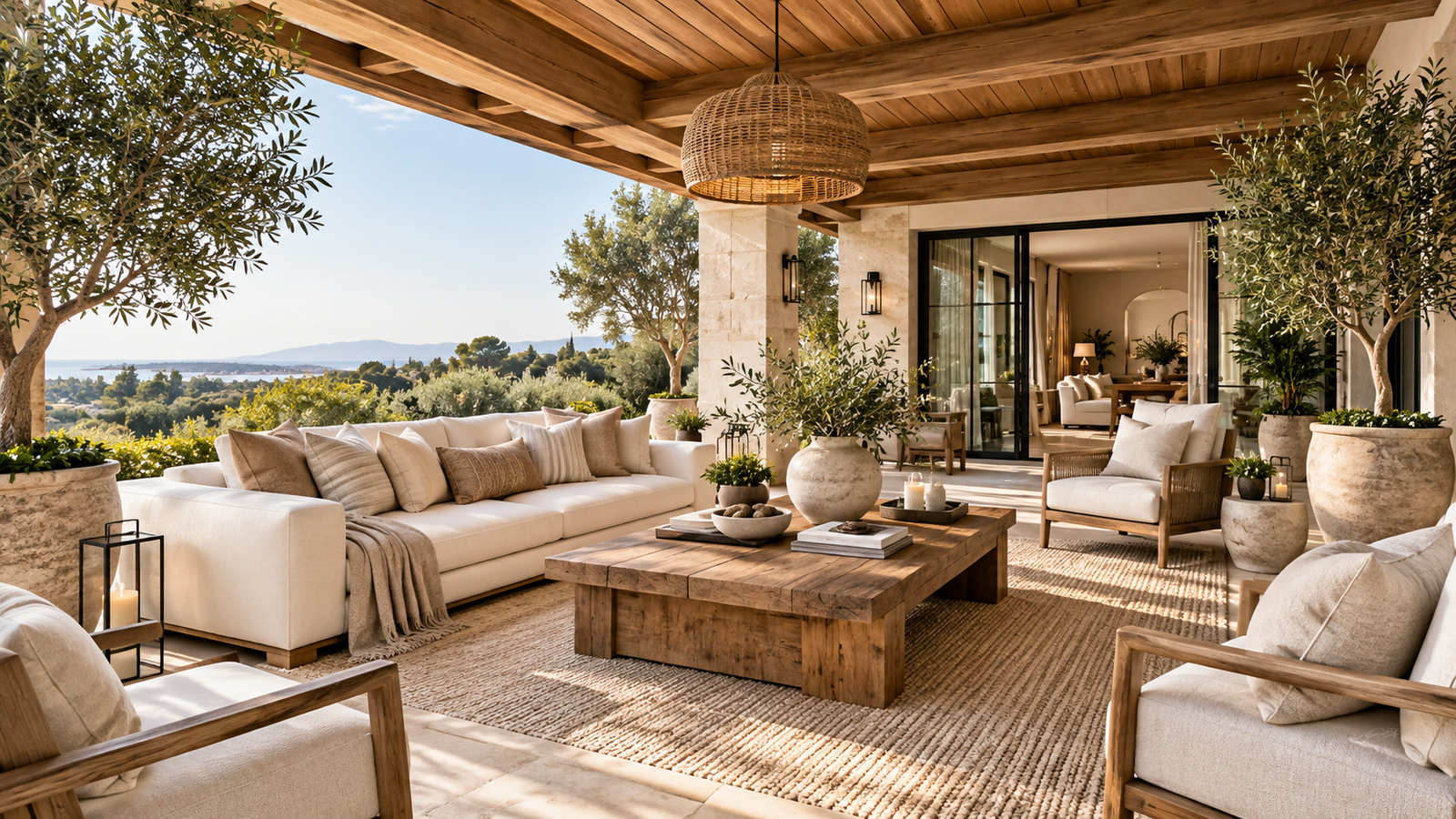
Terrace Decor Ideas: 21 Beautiful Ways to Create a Stylish Outdoor Space
A terrace can become one of the most enjoyable areas of a home when it is designed with the same care as an indoor living space. Whether you have a compact apartment terrace, a spacious rooftop, or a covered outdoor area connected to your home, thoughtful decorating can transform an empty surface into a comfortable place for relaxing, dining, entertaining, and enjoying fresh air.
The best terrace decor combines beauty with practicality. Comfortable outdoor furniture provides the foundation, while plants, lighting, rugs, cushions, shade, and decorative details make the area feel welcoming. You do not necessarily need a large renovation or an expensive collection of furniture. Even a few carefully chosen elements can dramatically improve the atmosphere.
Modern terrace design is also becoming increasingly connected to indoor interiors. Neutral palettes, natural wood, textured fabrics, sculptural furniture, oversized planters, and warm ambient lighting can make the transition between inside and outside feel seamless.
If your terrace currently feels empty or unfinished, these terrace decor ideas will help you turn it into a stylish outdoor retreat.
1. Create a Cozy Terrace Seating Area
Comfortable seating should be one of the first priorities when decorating a terrace.
Start by considering how you plan to use the space. If relaxation is your main goal, create a lounge-style arrangement with an outdoor sofa, two comfortable chairs, and a low coffee table.
Choose furniture that is appropriately scaled for the terrace. Oversized pieces can overwhelm a small area, while furniture that is too small can make a large terrace feel unfinished.
Neutral upholstery in cream, beige, taupe, or warm gray creates a timeless foundation. You can then introduce texture through cushions and throws.
A low wooden coffee table adds warmth and gives you somewhere to place drinks, books, candles, or decorative objects.
Position seating so people can enjoy the best view available. If the terrace overlooks a garden, skyline, or surrounding landscape, allow that view to become part of the design.
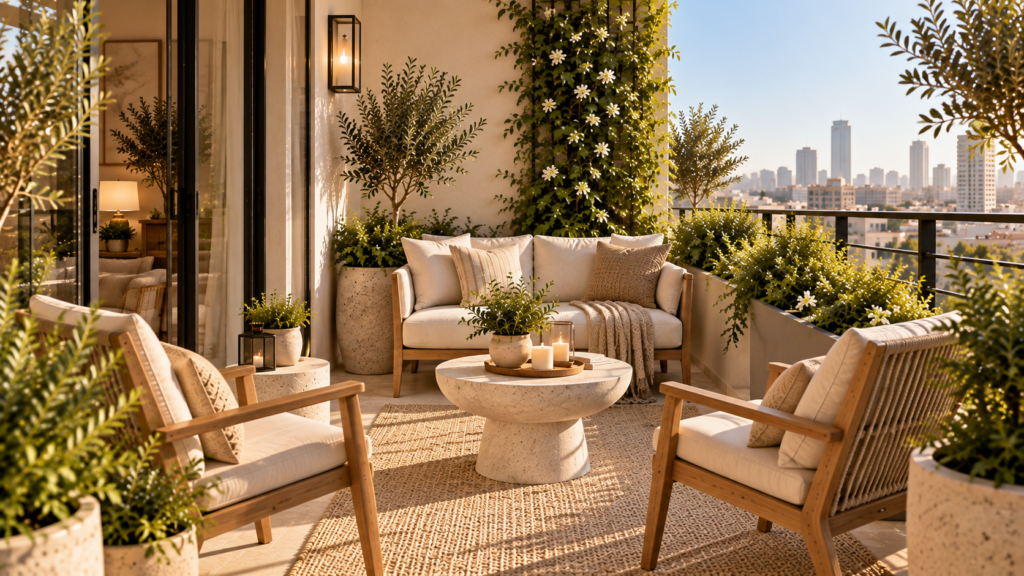
Cozy Neutral Terrace
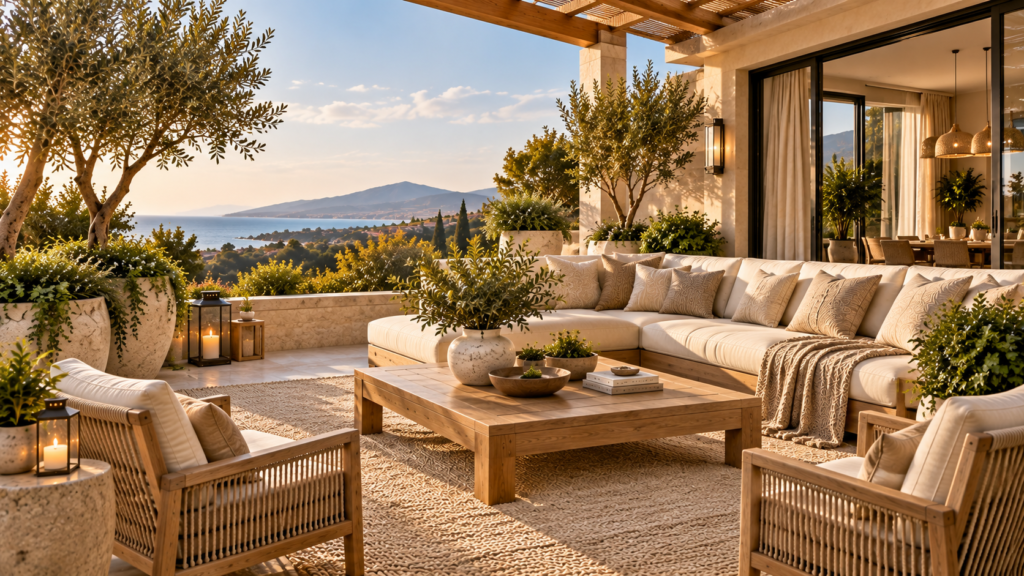
Comfortable cream outdoor sofa and lounge chairs around a warm wood coffee table, surrounded by large planters and soft neutral textiles.
2. Decorate with Large Outdoor Planters
Plants are one of the most effective ways to transform a terrace.
Instead of scattering many tiny pots around the floor, consider using several larger planters. Large containers make a stronger visual statement and can create a cleaner, more intentional design.
Mix different heights to add depth.
Tall plants can provide privacy and soften walls, while medium-height shrubs and lower greenery can fill gaps around seating areas.
Choose planters that coordinate with the architecture of your home. Matte stone, terracotta, concrete-look, ceramic, and simple neutral containers all work beautifully in contemporary terraces.
If you prefer a Mediterranean atmosphere, terracotta pots filled with herbs and sun-loving plants can create a relaxed character.
For an organic-modern terrace, choose large beige or stone planters with sculptural greenery.
Always select plants suited to your terrace’s actual sun exposure, wind, climate, and container conditions.
3. Add an Outdoor Rug
An outdoor rug can immediately make a terrace feel more like a finished room.
Place one beneath your main seating arrangement to visually define the lounge zone.
Neutral rugs with subtle geometric patterns are particularly versatile because they provide texture without dominating the design.
Beige, cream, taupe, gray, and natural woven-look finishes coordinate easily with outdoor furniture and greenery.
Make sure you choose a rug designed for outdoor conditions rather than using an indoor rug that may not tolerate moisture or strong sunlight.
The size matters too. A rug that is too small can make the furniture arrangement feel disconnected. Ideally, it should visually anchor the main pieces of seating.
An outdoor rug also helps soften hard surfaces such as tile, stone, or concrete.
4. Create a Modern Neutral Terrace
A neutral terrace can feel sophisticated without being overly formal.
Start with a restrained palette of cream, beige, warm white, taupe, and natural wood. Then introduce greenery as the primary source of color.
Choose furniture with clean silhouettes and simple upholstery.
A low cream sectional can provide generous seating, while sculptural lounge chairs add visual interest.
Instead of filling the terrace with decorative accessories, focus on materials and texture. Linen-look cushions, woven furniture, stone planters, wood tables, and textured outdoor rugs can create depth even when the color palette remains minimal.
Black or dark bronze accents can be used sparingly for contrast.
The result is a calm outdoor area that feels connected to contemporary interiors.
Modern Neutral Terrace
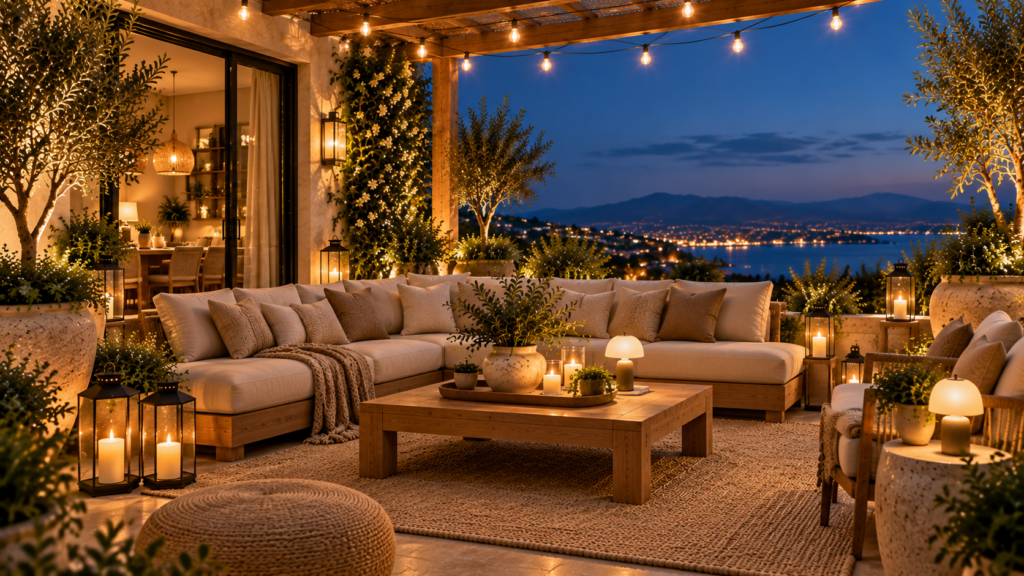
Sophisticated modern terrace with cream sectional seating, light stone flooring, sculptural furniture, neutral rug, oversized planters, and minimalist styling.
5. Introduce Warm Wooden Furniture
Wood is particularly effective outdoors because it complements greenery and natural surroundings.
A wooden dining table, lounge chair, bench, or coffee table can prevent a terrace dominated by concrete, metal, and stone from feeling cold.
You do not need to use wood for every piece.
For example, combine a neutral upholstered outdoor sofa with a warm wood coffee table. Or pair a wooden dining table with woven or upholstered chairs.
The contrast between soft textiles, natural wood, and green plants creates an inviting atmosphere.
Outdoor furniture should be made from materials and finishes appropriate for exterior use and maintained according to its requirements.
If you prefer a more contemporary look, choose furniture with simple lines rather than heavily decorative details.
6. Design a Terrace Dining Area
If your terrace has enough room, an outdoor dining area can completely change how you use the space.
A dining table creates a natural destination for breakfast, evening meals, weekend gatherings, and entertaining.
Choose a table shape based on the available space.
Rectangular tables work well on long terraces, while round tables can make compact areas easier to navigate.
Add comfortable dining chairs rather than selecting pieces purely for appearance. Outdoor meals become far more enjoyable when guests can sit comfortably for longer periods.
A pendant-style outdoor light, where suitable and properly installed, can help define the dining zone on a covered terrace.
Add a few planters around the perimeter and keep the center relatively uncluttered.
If your terrace is large enough, separate the dining area from the lounge using rugs, furniture orientation, or planters.
Terrace Dining Area
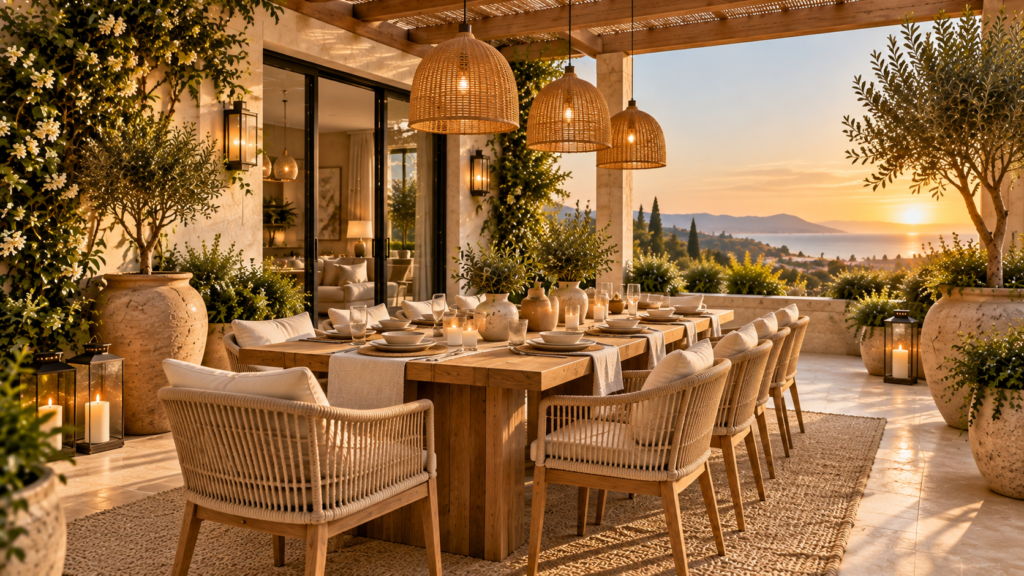
Elegant outdoor dining terrace featuring a natural wood table, comfortable neutral chairs, greenery, large planters, and warm evening lighting.
7. Use String Lights for a Cozy Evening Atmosphere
Lighting can completely change the character of a terrace after sunset.
String lights are one of the simplest ways to introduce a warm, relaxed atmosphere.
Rather than using extremely bright lights, choose subtle illumination that complements other light sources.
String lights can be suspended overhead where the structure allows, wrapped around a pergola, or positioned along an appropriate boundary.
Combine them with wall lights, lantern-style fixtures, or small rechargeable table lamps to create several layers of illumination.
The goal is to provide enough light for comfortable use without making the terrace feel harsh.
For electrical installations outdoors, always use products and installation methods intended for exterior conditions.
8. Add Lanterns and Decorative Lighting
Lanterns can create attractive pools of light around a terrace.
Place larger lanterns near seating areas or along walls, making sure they do not create trip hazards.
Battery-powered or rechargeable outdoor lights can be particularly convenient when electrical outlets are limited.
You can also use small table lamps designed for exterior use.
Warm lighting works beautifully with wood furniture, beige textiles, and greenery.
Instead of relying on a single strong ceiling light, combine multiple softer light sources. This layered approach makes the terrace feel more intimate and visually interesting.
Evening Terrace Lighting
Cozy terrace at dusk with warm string lights, lanterns, subtle table lamps, neutral lounge seating, textured cushions, and lush plants.
9. Create Privacy with Plants
Privacy can be challenging on apartment terraces and rooftops.
Plants offer an attractive way to create separation without making the area feel enclosed.
Tall planters positioned along the edge of a terrace can form a soft green screen.
Depending on your climate and growing conditions, you might use ornamental grasses, shrubs, climbing plants, or compact trees suited to containers.
A trellis with climbing greenery can also help conceal an unattractive wall.
Avoid blocking every view unnecessarily. Instead, identify the areas where privacy is most important—usually around seating or dining zones.
This approach allows you to maintain openness while making the terrace feel more secluded.
10. Make a Small Terrace Feel Bigger
A small terrace can still be extremely stylish.
The most important rule is to avoid overcrowding it.
Choose compact furniture with lighter visual profiles. A small loveseat, two slim chairs, or a built-in bench may work better than a large sectional.
Consider furniture that serves more than one purpose. A storage bench can provide seating and hide cushions or accessories.
Use walls and railings intelligently where safe and appropriate. Vertical planters and narrow shelving can introduce greenery without consuming valuable floor space.
Keep the central walking path open.
A lighter color palette can also help create a sense of openness. Cream cushions, light flooring, pale wood, and restrained accessories prevent the area from feeling visually heavy.
Small Terrace Decor
Stylish compact terrace with slim seating, small round table, vertical greenery, neutral textiles, space-saving planters, and an uncluttered layout.
11. Add a Pergola for Structure and Shade
A pergola can transform a large open terrace by giving it a stronger architectural identity.
It visually defines a seating or dining zone and may provide a framework for appropriate shade solutions, lighting, or climbing plants.
Wooden pergolas create a warm natural appearance, while metal structures can suit more contemporary architecture.
If you want a softer atmosphere, climbing greenery can help integrate the structure with the landscape.
You can also use suitable outdoor curtains or adjustable shade systems depending on the structure and weather conditions.
Because pergolas can involve structural loads, wind exposure, waterproofing, and local building requirements, permanent installations should be properly planned.
12. Decorate a Covered Terrace Like an Outdoor Living Room
A covered terrace provides more opportunities to introduce indoor-inspired decorating.
Start with a comfortable seating arrangement.
Then add an outdoor rug, side tables, cushions, decorative lighting, and carefully selected accessories.
Because the area has overhead protection, it can feel more intimate than a completely open rooftop.
You might add a console against a protected wall, use large artwork specifically suitable for the environment, or introduce substantial planters.
However, remember that a covered terrace is still exposed to temperature changes, humidity, wind, and potentially rain. Materials should be chosen accordingly.
The goal is to capture the comfort of an indoor living room while maintaining the durability required outdoors.
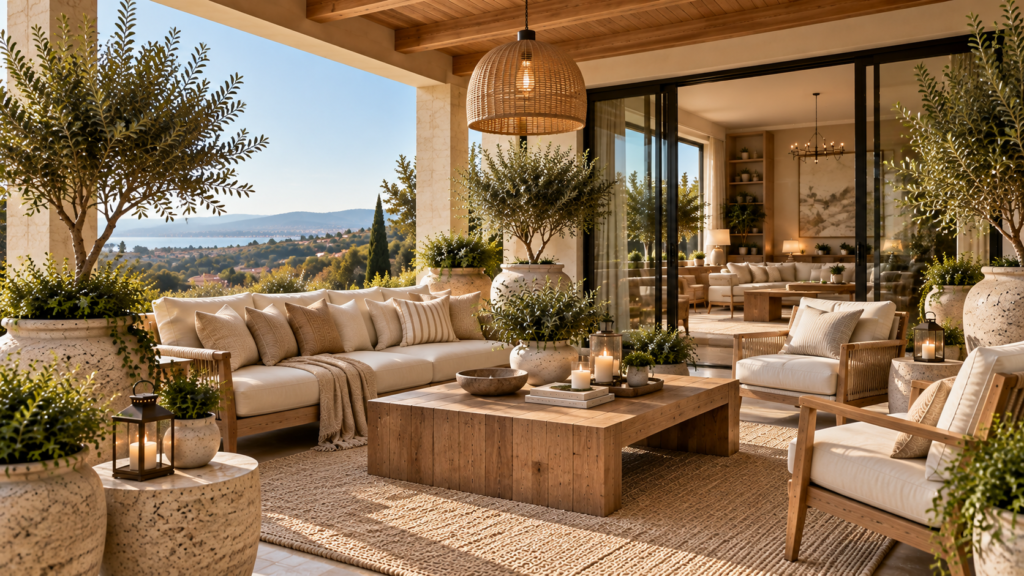
Covered Terrace Living Room
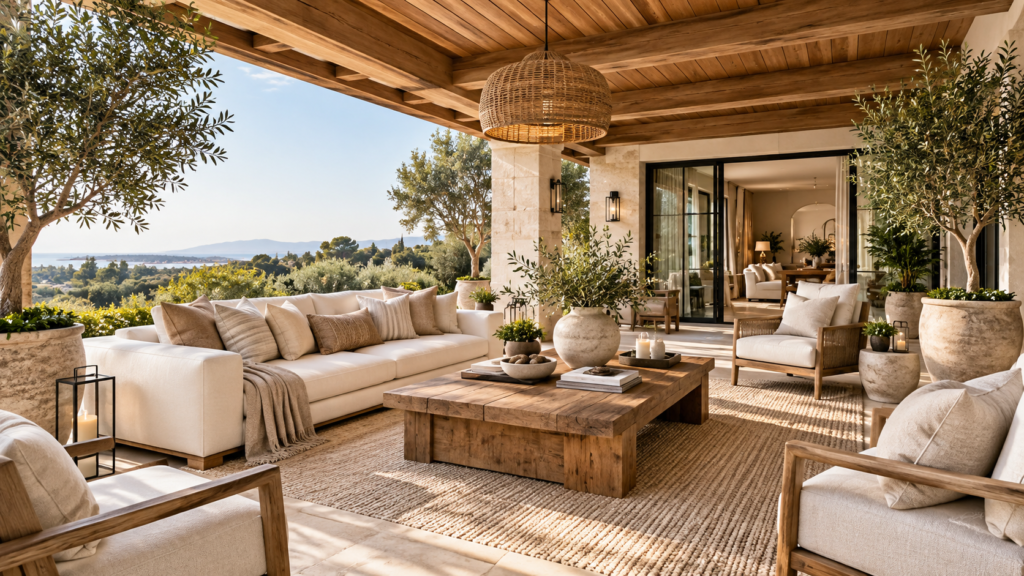
Beautiful covered terrace styled like an outdoor living room with cream sofas, wood tables, outdoor rug, linen-look cushions, greenery, and sophisticated lighting.
13. Create a Mediterranean-Inspired Terrace
Mediterranean terrace design is perfect if you want an outdoor area that feels relaxed, warm, and timeless.
Begin with a warm neutral backdrop.
Cream or textured off-white walls provide a beautiful foundation for terracotta, wood, and greenery.
Use large terracotta planters in different sizes and fill them with suitable herbs, flowering plants, or sculptural greenery.
Add natural wood or woven furniture with simple cream cushions.
A stone or mosaic-style table can become an attractive focal point.
Rather than making everything perfectly coordinated, allow subtle variations in pottery and texture. This gives the terrace the collected character associated with Mediterranean outdoor spaces.
14. Try a Boho Terrace Style
Bohemian terrace decor is ideal for creating a casual, layered atmosphere.
Start with relaxed seating and then introduce texture through cushions, rugs, woven accessories, and plants.
Earthy shades such as beige, rust, muted brown, olive, and cream work particularly well.
A rattan-look chair or woven pendant can introduce additional character, provided the material is appropriate for your terrace conditions.
Plants should feel abundant without making the terrace difficult to navigate.
Instead of perfectly matching planters, combine several complementary textures and shapes.
Keep the overall arrangement intentional so that the layered style feels cozy rather than cluttered.
15. Create a Green Terrace Garden
If you love plants, make greenery the main feature of your terrace.
Start by planning different plant heights.
Use taller plants around the perimeter, medium planters near seating areas, and smaller containers on appropriate surfaces.
Vertical planting can make use of walls and is particularly valuable on smaller terraces.
Instead of choosing plants purely for appearance, consider the amount of direct sunlight, wind exposure, drainage, watering needs, and local climate.
Leave enough room between planters for maintenance.
A terrace garden is most successful when it remains comfortable for people as well as plants.
Plant-Filled Terrace Garden
Lush urban terrace garden with layered greenery, oversized planters, comfortable neutral seating, natural wood furniture, and a serene botanical atmosphere.
16. Add an Outdoor Bench
A bench is a practical solution for narrow terraces.
Position it against a wall so that it does not interrupt the main circulation area.
Built-in benches can be customized to fit awkward corners and may also incorporate storage.
Add outdoor cushions to make the bench comfortable.
For a more relaxed look, mix two or three cushion sizes rather than covering the entire bench with identical pillows.
A small side table can turn the area into a useful reading or coffee corner.
17. Use Sculptural Furniture as a Focal Point
Not every terrace needs a large number of decorative objects.
Sometimes one distinctive furniture piece can provide enough personality.
A curved lounge chair, sculptural coffee table, rounded sofa, or unusually shaped side table can become the visual centerpiece.
Keep surrounding pieces simpler so they do not compete with the focal point.
This approach works particularly well in minimalist and contemporary terraces.
The combination of restrained colors and interesting shapes can create a high-end appearance without excessive decoration.
18. Add Soft Outdoor Textiles
Hard surfaces dominate most terraces, so textiles are important for creating comfort.
Use outdoor cushions to add softness to seating.
A washable exterior rug can help define the space, while weather-appropriate throws may be useful during cooler evenings if they are stored indoors when necessary.
Try mixing textures rather than introducing too many colors.
For example, combine smooth cream cushions with subtle woven beige and taupe designs.
This gives a neutral terrace depth while preserving its calm aesthetic.
19. Design a Dark and Sophisticated Terrace
Neutral terraces are popular, but darker outdoor spaces can look equally beautiful.
Charcoal furniture, black-framed structures, dark planters, and deep brown wood can create a sophisticated atmosphere.
Balance darker elements with cream cushions and plenty of greenery.
Warm lighting is particularly important because it prevents the design from feeling cold at night.
Dark palettes often work especially well on city rooftops where they visually connect with the surrounding skyline after sunset.
20. Create a Luxury Rooftop Terrace
A large rooftop terrace provides an opportunity to create several distinct outdoor zones.
Start with a generous lounge area using comfortable seating around a substantial coffee table.
Create a separate dining area nearby.
Large planters can act as natural dividers between zones without constructing solid walls.
If shade is needed, consider an appropriate pergola or other exterior-rated shade solution.
Integrate layered lighting so the terrace remains attractive after dark.
Luxury terrace design is not simply about expensive furniture. Spacious circulation, cohesive materials, comfortable seating, quality lighting, and thoughtful landscaping contribute just as much to the overall result.
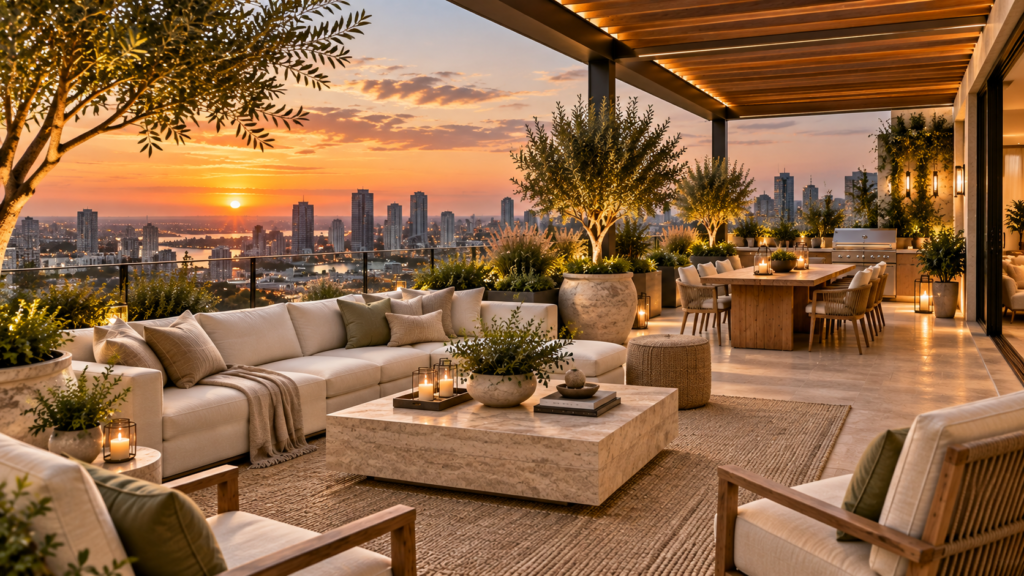
Luxury Rooftop Terrace
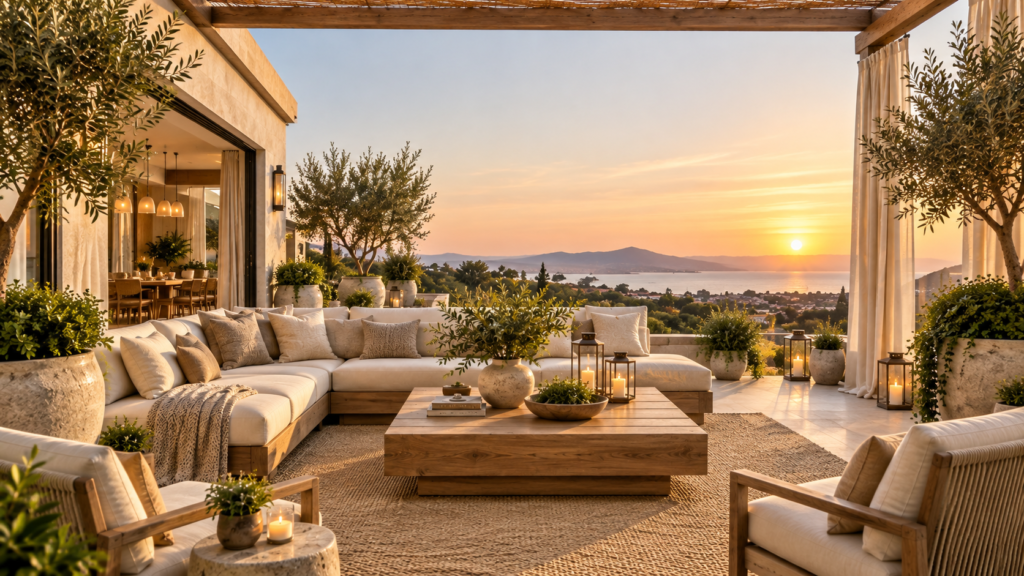
High-end rooftop terrace with sophisticated lounge seating, dining zone, oversized planters, modern pergola, warm architectural lighting, and city views.
21. Keep the Terrace Uncluttered
One of the easiest mistakes to make when decorating a terrace is adding too much.
Outdoor spaces benefit from breathing room.
Rather than covering every corner with furniture and planters, identify the activities that matter most to you.
If you mainly use the terrace for relaxing, prioritize comfortable seating and greenery. If entertaining is important, devote more space to dining and flexible seating.
Keep walkways clear and allow enough room around furniture for people to move comfortably.
Limit decorative accessories to a few carefully chosen pieces.
The terrace itself—the fresh air, sunlight, plants, and view—should remain part of the experience.
How to Decorate a Terrace on a Budget
Creating a beautiful terrace does not necessarily require expensive outdoor furniture or a complete renovation.
Begin with what you already have and identify the biggest problem. An empty terrace may simply need seating, while an existing terrace might benefit more from improved lighting or greenery.
A few large planters can have more impact than many small decorative accessories.
Outdoor cushions are another affordable way to refresh existing furniture. Choose two or three coordinating textures so the arrangement feels intentional.
String lights or rechargeable outdoor lamps can dramatically change the atmosphere in the evening.
If the floor feels bare, add an appropriately sized outdoor rug.
You can also repaint suitable existing furniture or planters with products intended for their materials and outdoor conditions.
Prioritize changes that affect the entire space rather than buying many small decorations.
How to Make a Small Terrace Cozy
Coziness comes from creating a sense of enclosure and comfort without making the space cramped.
Start with one comfortable seating area rather than trying to include multiple furniture zones.
Place a rug beneath the seating to define the area.
Introduce plants around the perimeter so the terrace feels protected and connected to nature.
Add warm evening lighting at different heights.
Soft cushions provide comfort, while natural materials such as wood and woven textures make the area feel warmer.
Keep accessories restrained. In a small space, even a few carefully selected objects can have a strong visual impact.
Best Colors for Terrace Decor
Neutral palettes remain among the most flexible choices for outdoor areas.
Cream, beige, taupe, warm gray, and natural wood create a sophisticated base that works beautifully with greenery.
For an earthy terrace, introduce terracotta, muted olive, warm brown, and sandy beige.
A Mediterranean palette might combine creamy white, terracotta, natural wood, and fresh green plants.
For something more dramatic, use charcoal or black as an accent against lighter upholstery.
You can also introduce seasonal color through cushions and plants rather than committing to brightly colored furniture.
This makes it easier to update the terrace over time.
How to Make a Terrace Look Expensive
A terrace often looks more luxurious when the design is restrained and cohesive.
Start with a limited material palette. For example, combine warm wood, cream upholstery, light stone, and greenery.
Use fewer but larger planters rather than many unrelated small pots.
Make sure the main furniture pieces relate to each other in scale and style.
A large outdoor rug can anchor the seating arrangement, while layered lighting creates atmosphere after sunset.
Pay attention to furniture placement. Even expensive pieces can look awkward when pushed randomly against walls.
Finally, leave some empty space.
A well-designed luxury terrace feels comfortable and spacious rather than filled with as many objects as possible.
Terrace Decor Mistakes to Avoid
A successful terrace needs to work in real outdoor conditions.
Avoid choosing furniture based only on appearance. Materials should suit the amount of sun, rain, humidity, wind, and temperature variation the terrace experiences.
Do not overcrowd a small terrace with oversized seating.
Similarly, avoid filling every edge with plants until maintaining them becomes difficult.
Lighting should be planned rather than treated as an afterthought.
Make sure rugs, lights, furniture, cushions, and decorative materials are suitable for exterior use where necessary.
Privacy screens, pergolas, and large planters should also be positioned with safety and wind exposure in mind.
Most importantly, design the terrace for how you actually want to use it.
Final Thoughts
Terrace decor is about creating an outdoor space that feels comfortable enough to become part of everyday life.
You do not need a huge rooftop or an elaborate renovation. A small terrace with comfortable seating, a few beautiful plants, soft lighting, and an outdoor rug can become just as inviting as a larger space.
Start with function. Decide whether you want your terrace primarily for relaxing, dining, entertaining, gardening, or a combination of activities.
Then create a clear furniture layout around those needs.
Introduce greenery to soften hard architectural surfaces and provide privacy where necessary. Use natural materials such as wood and stone-inspired finishes to connect the space with the outdoors.
Textiles can bring softness through cushions and rugs, while layered lighting makes the terrace usable and atmospheric after sunset.
For a timeless look, build the design around neutral shades and natural materials. For something more expressive, explore Mediterranean pottery, bohemian textiles, dark contemporary furniture, or abundant greenery.
Above all, resist the temptation to fill every available corner.
The most beautiful terraces usually balance furniture, plants, decoration, and open space. When each element has a purpose, the entire area feels calmer and more intentional.
Whether you are decorating a compact apartment terrace, a covered outdoor room, or a luxurious rooftop, thoughtful choices can transform it into a stylish extension of your home—a place where you can enjoy morning coffee, unwind at the end of the day, share meals with family, or simply spend more time outdoors.