18 Beautiful Indoor Trellis Ideas to Bring Greenery and Style Into Your Home
Bringing plants indoors is one of the easiest ways to make a home feel warmer, fresher, and more connected to nature. But instead of placing every plant in a pot on the floor or a shelf, an indoor trellis allows greenery to become part of the architecture itself. Climbing plants can grow upward, spread across a wall, frame a window, or create a beautiful vertical feature without occupying much valuable floor space.
An indoor trellis is essentially a decorative framework that gives climbing or trailing plants something to grow against. It can be made from wood, metal, wire, bamboo, or other suitable materials. Some trellises are attached directly to walls, while others rise from planters or stand independently.
The result can be as subtle as a single climbing plant trained along a minimalist metal frame or as dramatic as a large living feature wall covered with greenery.
Indoor trellises are particularly attractive in organic-modern, Scandinavian, contemporary, bohemian, and nature-inspired interiors. Natural materials and greenery soften hard architectural surfaces while introducing height, movement, and texture.
The best designs also consider practical plant needs. The trellis should be positioned where the selected plant receives suitable light, and its structure should be appropriate for the way that particular plant climbs or trails.
If you want to turn ordinary houseplants into a more intentional design feature, these 18 indoor trellis ideas offer plenty of inspiration.
1. Create a Wooden Wall Trellis in the Living Room
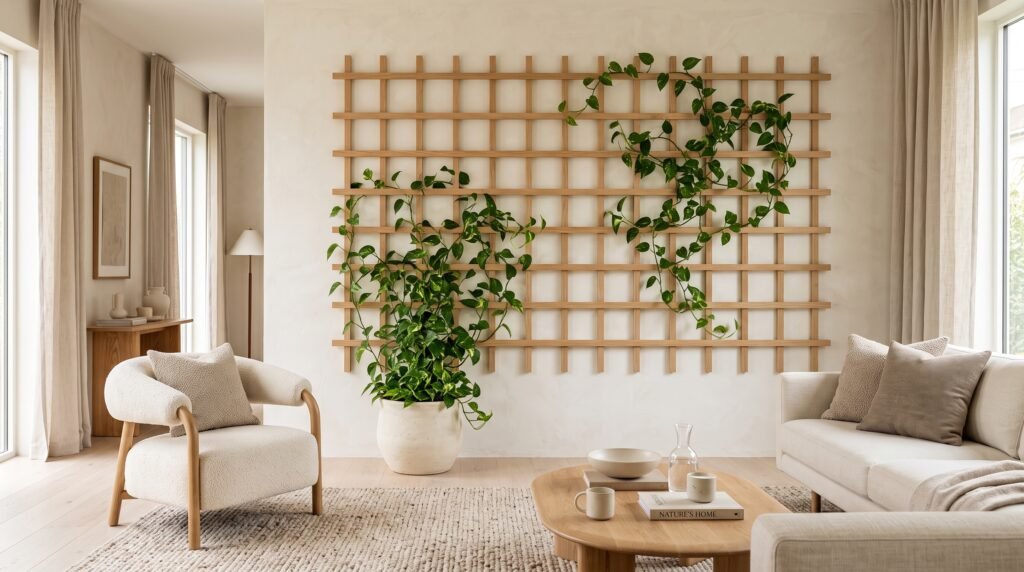
A simple wooden wall trellis is one of the most versatile ways to introduce climbing greenery indoors.
Install a slim grid-style trellis against a warm white or cream wall and position a large planter directly underneath it. As the plant grows, gently guide its stems across the framework.
Light oak works particularly well in neutral interiors because it adds warmth without becoming visually heavy.
Style the surrounding room with a cream sofa, textured ivory rug, natural wood coffee table, linen curtains, and a few handmade ceramic accessories. The green foliage then becomes the strongest color in the space.
Avoid covering every section of the trellis immediately. Allowing some of the wooden structure to remain visible creates a lighter, more architectural appearance.
Over time, the plant can naturally fill additional sections and give the feature a relaxed, established character.
Light Oak Indoor Wall Trellis with Climbing Greenery
2. Use a Minimalist Metal Trellis
For contemporary interiors, a thin metal trellis provides a cleaner and more graphic alternative to wood.
Choose a simple black, bronze, or warm metallic frame with narrow vertical and horizontal lines. Against a pale wall, the structure itself becomes part of the decoration.
A minimalist metal trellis looks especially elegant with a restrained amount of greenery. Rather than allowing foliage to completely hide the framework, train selected stems along individual lines.
Place the trellis behind a console, beside a reading chair, or on a narrow wall that would otherwise remain empty.
Black metal can introduce contrast into a cream-and-beige interior, while aged brass or bronze creates a softer, warmer effect.
This approach is ideal if you like greenery but still want your interior to feel structured and contemporary.
3. Build a Trellis Directly Into a Planter
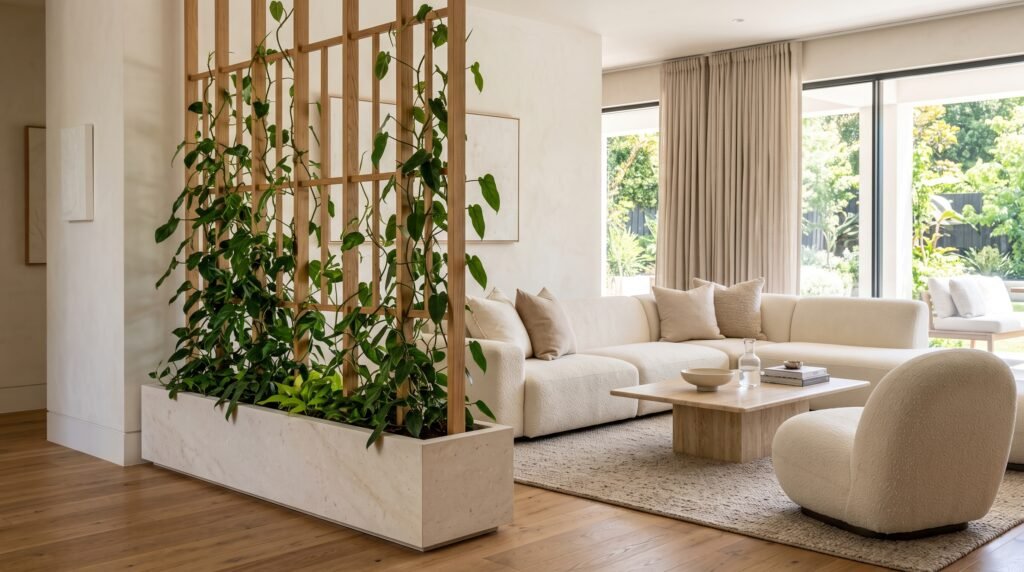
A planter-and-trellis combination creates a complete vertical garden feature without requiring the framework to be permanently attached to the wall.
Choose a long rectangular planter with a tall trellis rising directly from its back edge. The planter could be made from warm oak, textured stone, matte ceramic, or another material that complements the room.
This setup is particularly useful in open living areas, sunrooms, offices, and larger bedrooms.
Because everything is contained within one unit, it can feel more like a piece of furniture than a traditional garden accessory.
For an elegant organic-modern look, combine a pale stone planter with a warm oak trellis. Allow climbing greenery to rise upward while keeping the surrounding styling minimal.
Luxury Indoor Planter with Integrated Trellis
4. Frame a Window with Climbing Greenery
Windows provide natural light, making them a logical location for many indoor plants.
Instead of simply lining pots along the windowsill, use a trellis to guide suitable climbing greenery around the window frame.
A narrow wooden or metal structure can be installed beside the opening, allowing vines to climb upward while leaving most of the glass unobstructed.
The result can make a window feel almost like a framed garden view.
Soft oatmeal linen curtains work beautifully with this idea. When combined with green foliage, natural wood, and warm daylight, they create a relaxed indoor-outdoor feeling.
Be careful not to let dense foliage block too much natural light, especially in smaller rooms.
The goal is to frame the window rather than completely cover it.
5. Create an Arched Indoor Trellis
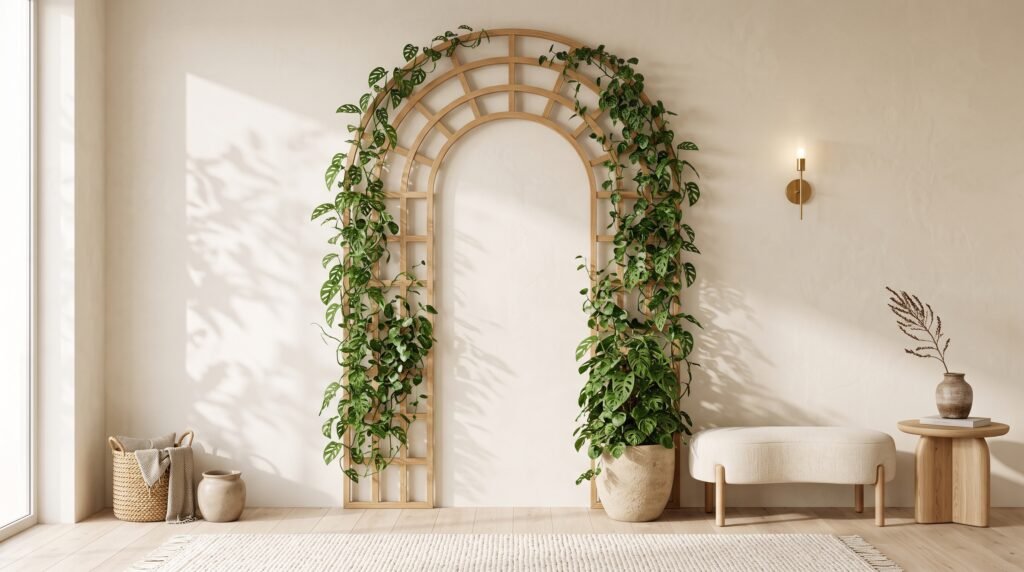
An arched trellis introduces a softer architectural shape than a standard rectangular grid.
Position one against a blank wall and place a planter at its base. Train climbing foliage around the sides and gradually toward the top of the arch.
This can create the impression of a green architectural doorway even though the feature is purely decorative.
A warm oak frame against creamy plaster is ideal for an organic-modern interior. For something more delicate, use a slim dark metal arch.
The curved shape pairs particularly well with rounded furniture, organic mirrors, sculptural lighting, and softly textured rugs.
Keep some negative space within the arch rather than filling it completely with leaves. This allows the distinctive shape to remain visible.
Arched Indoor Trellis Feature Wall
6. Turn a Blank Hallway Wall into a Green Feature
Hallways are frequently overlooked because there may not be enough room for substantial furniture.
A wall-mounted trellis provides decoration vertically instead of taking up circulation space.
Choose a slim trellis that sits relatively close to the wall. A narrow planter or carefully positioned pot can provide greenery at the base.
For long hallways, consider using two or three separated trellis sections rather than one continuous wall. This creates rhythm while keeping the feature controlled.
Warm wall sconces can illuminate the foliage in the evening, casting beautiful organic shadows against the wall.
Pair the greenery with limestone flooring, a neutral runner, and warm white walls for an elegant architectural effect.
7. Design a Freestanding Trellis Room Accent
Not every trellis needs to be attached to a wall.
A freestanding structure can become a decorative feature in a larger room while supporting climbing plants.
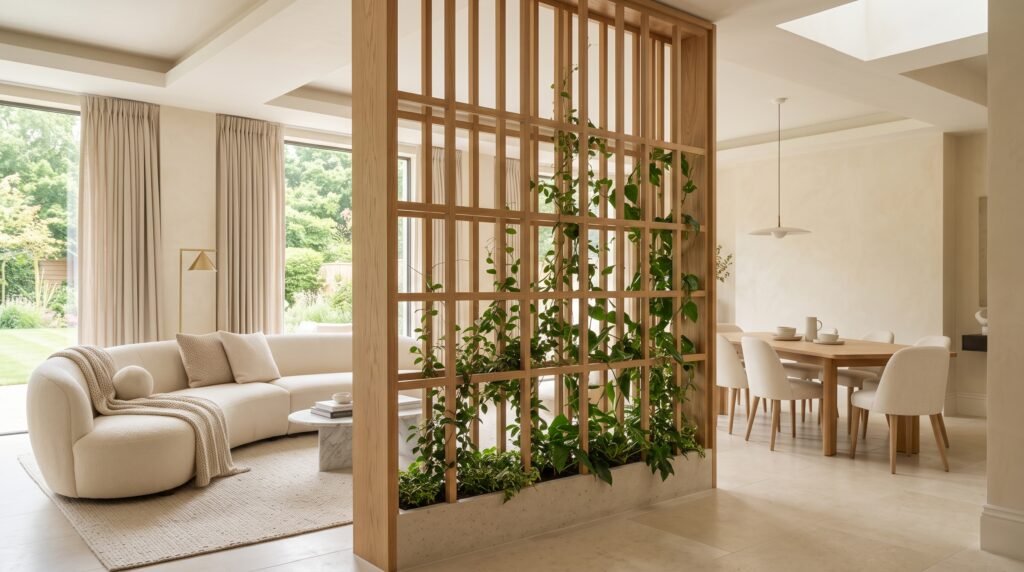
Place it behind a lounge chair, beside a sofa, or between two functional zones. Unlike a solid partition, an open trellis allows light and sightlines to pass through.
This makes it particularly suitable for open-plan interiors.
For a sophisticated look, choose a simple oak or metal frame with generous spacing between its vertical elements. Allow greenery to climb selectively rather than covering the entire structure.
The result should feel light and sculptural rather than like a dense hedge.
Freestanding Indoor Trellis with Greenery
8. Add a Trellis Above a Console Table
A console wall is an ideal place for a smaller decorative trellis.
Instead of hanging conventional artwork or a mirror, mount a compact architectural trellis above the console and place a climbing plant nearby.
The foliage can gradually travel across the frame, creating a living artwork effect.
Style the console simply with a ceramic lamp, a small stack of books, and one sculptural bowl.
If the trellis already contains abundant greenery, avoid adding too many accessories. The leaves provide plenty of visual detail.
This approach works especially well in entryways, living rooms, and transitional areas where you want an unexpected focal point.
9. Create a Ceiling-Height Trellis
If you have generous ceiling height, emphasize it with a tall trellis that stretches nearly from floor to ceiling.
Vertical lines naturally draw the eye upward, making the architecture feel taller.
Choose a narrow structure rather than an overly wide one. This creates a strong vertical feature without dominating the whole wall.
A large planter at the bottom can anchor the composition visually.
As the plant climbs higher, the greenery creates a beautiful connection between floor level and the upper part of the room.
For dramatic effect, place the trellis where it receives side lighting from a nearby window. The leaves and framework will cast changing shadows throughout the day.
10. Use a Trellis Behind a Reading Corner
Plants and reading spaces naturally work well together because both contribute to a relaxed atmosphere.
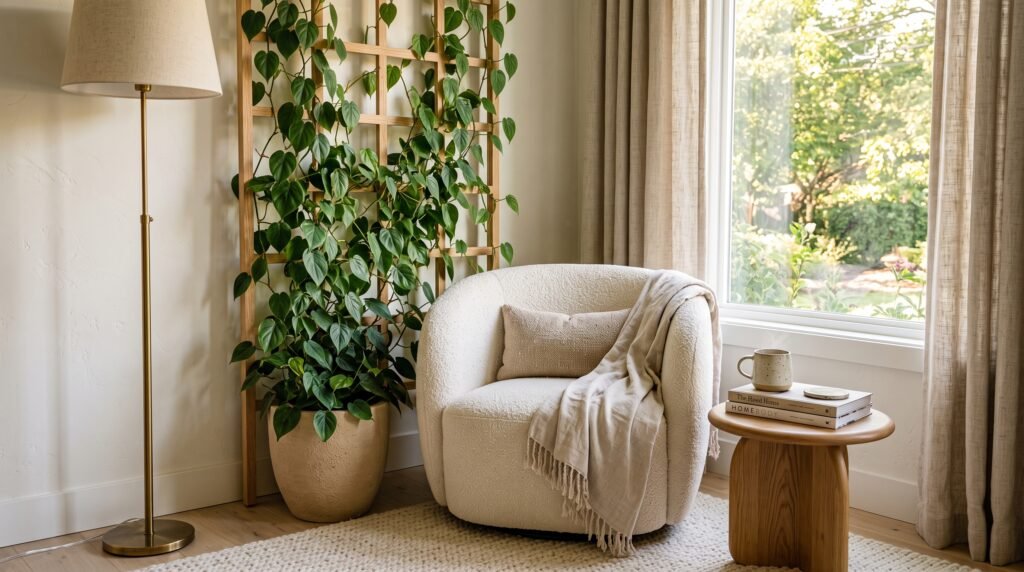
Create a cozy reading corner with a comfortable cream boucle chair, small oak side table, warm floor lamp, and soft textured rug.
Behind the chair, install a narrow wooden trellis with climbing greenery.
The trellis adds height and creates a subtle visual backdrop without requiring artwork.
Keep the plant growth slightly loose rather than perfectly symmetrical. Natural irregularity helps soften the clean geometry of the framework.
A nearby window can provide both reading light and appropriate light for the selected plant.
Cozy Reading Corner with Indoor Plant Trellis
11. Create a Modern Wire Trellis
Wire systems provide one of the most minimal interpretations of an indoor trellis.
Thin wires can create vertical lines, geometric grids, or custom patterns against a wall. From a distance, the support structure almost disappears, allowing the plant to become the primary visual element.
This approach is particularly effective in modern homes where a traditional wooden lattice might feel too rustic.
Use discreet wall anchors and keep the pattern simple.
A warm white wall provides a beautiful background for fresh green leaves.
Because installation requirements depend on the wall and system, ensure the supports are appropriate for the intended plant weight and avoid damaging hidden wiring or plumbing when mounting hardware.
12. Combine a Trellis with Built-In Shelving
A trellis does not have to exist separately from storage.
Consider integrating a narrow trellis section into a custom shelving wall. Open oak shelves can display books, ceramics, and sculptural objects while a climbing plant grows through a dedicated vertical section.
This creates a beautiful contrast between curated objects and natural greenery.
Integrated shelf lighting can illuminate both the accessories and foliage in the evening.
Keep the shelves relatively uncluttered. Negative space is important because both the plant and trellis already introduce visual texture.
This idea works particularly well in living rooms, home offices, and larger hallways.
13. Use Trellises to Highlight an Indoor Plant Collection
If you already own several houseplants, a trellis can help bring them together into one cohesive composition.
Instead of scattering pots randomly throughout the room, create a dedicated plant zone.
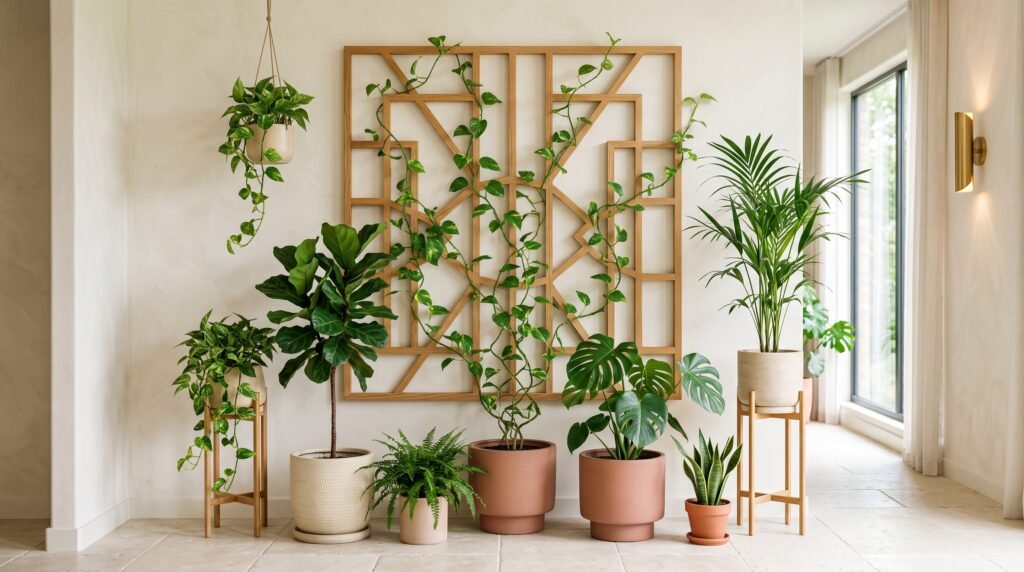
Place taller floor plants toward the edges, smaller pots on low stands, and one climbing plant against the central trellis.
Using planters in coordinating colors—such as cream, stone, terracotta, or warm beige—helps the collection feel intentional.
Vary plant heights and leaf shapes so the arrangement has depth.
The trellis provides a strong architectural background that visually connects the entire group.
Indoor Plant Display with Decorative Trellis
14. Create a Trellis Around an Interior Archway
An existing interior arch can become even more beautiful when paired with controlled greenery.
Install a subtle trellis framework near the sides of the opening and train climbing plants upward, allowing the foliage to softly emphasize the curve.
Do not completely cover the architectural shape. The goal is to complement the arch rather than hide it.
This approach works beautifully between a living room and sunroom, near a conservatory-inspired area, or around an opening that receives good natural light.
Cream plaster, pale oak floors, linen curtains, and greenery create a Mediterranean-meets-organic-modern atmosphere.
The finished effect can feel as though the garden is gently entering the home.
15. Try a Geometric Trellis as Living Wall Art
A trellis can be decorative even before plants cover it.
Instead of a conventional square lattice, choose a geometric pattern made from intersecting wooden strips or slim metal rods.
Mount it on a large blank wall and allow a climbing plant to travel selectively across the pattern.
Some sections can remain completely empty.
This balance between structure and greenery creates the appearance of living wall art.
For a sophisticated contemporary interior, use a warm oak geometric trellis against an off-white wall. Add a simple cream bench or console beneath it and keep surrounding accessories minimal.
16. Create a Trellis Feature in a Dining Area
Greenery can soften dining spaces that contain many hard surfaces such as tables, flooring, and cabinetry.
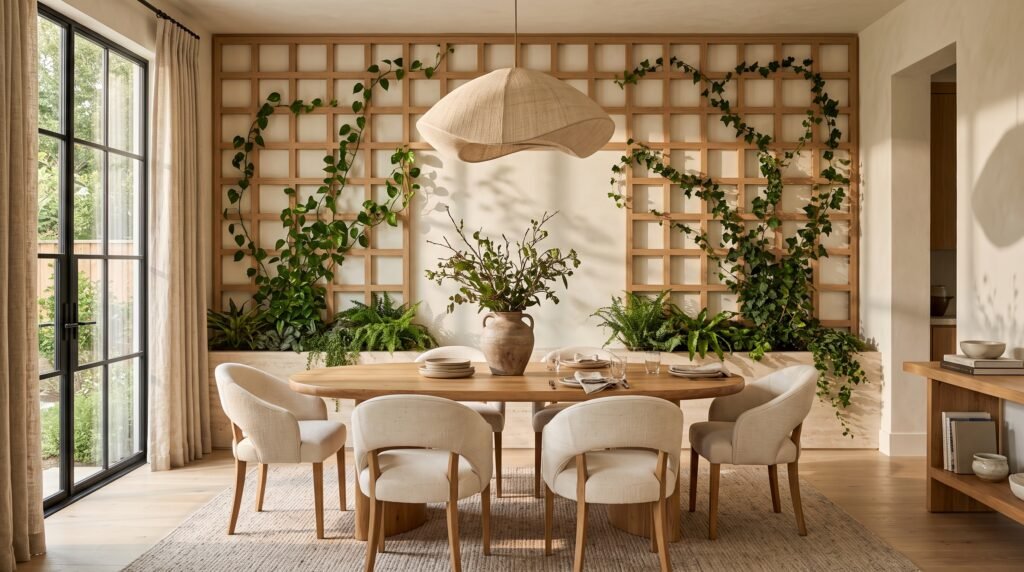
Install a trellis on the wall behind the dining table or along one side of the room.
A large climbing plant can create a fresh backdrop without requiring multiple pieces of artwork.
Pair a light oak trellis with an oval wooden dining table, cream upholstered chairs, and a sculptural pendant light.
A large ceramic planter can coordinate with the table centerpiece.
During daylight, the greenery makes the dining space feel fresh and casual. In the evening, warm pendant lighting can produce beautiful shadows across the leaves and trellis.
Elegant Dining Room with Indoor Trellis Wall
17. Use a Trellis in a Small Apartment
Indoor trellises are not limited to large houses.
In fact, vertical growing solutions can be particularly useful in compact apartments because they take advantage of wall height instead of floor area.
Choose a narrow wall-mounted trellis and pair it with one medium-sized planter.
Position it beside a sofa, near a window, or behind a small bench.
Keep the framework visually lightweight. Pale wood or thin metal prevents the feature from making the room feel crowded.
One healthy climbing plant can provide more visual impact than numerous small pots distributed around a compact room.
The result feels organized, fresh, and intentional.
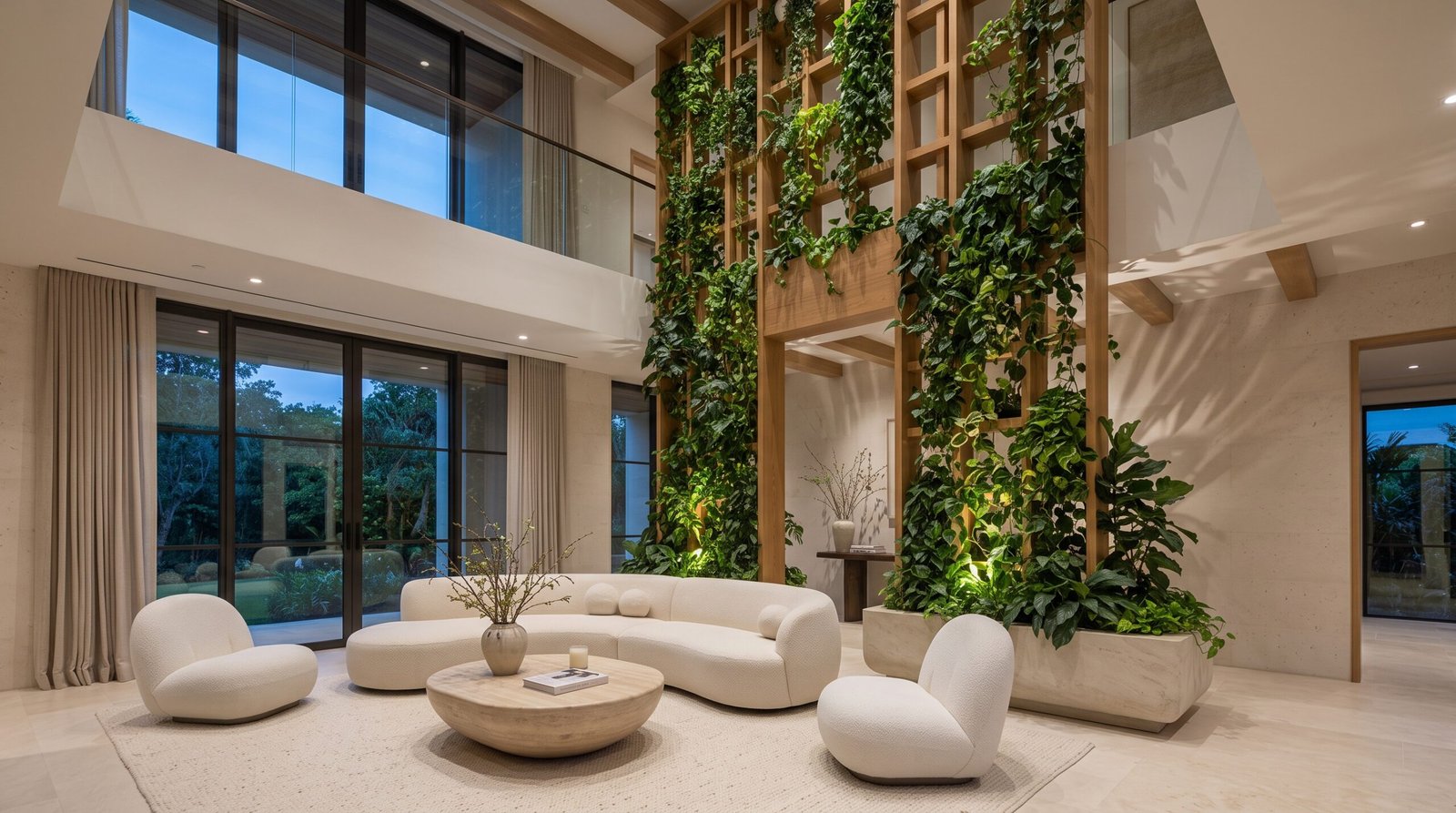
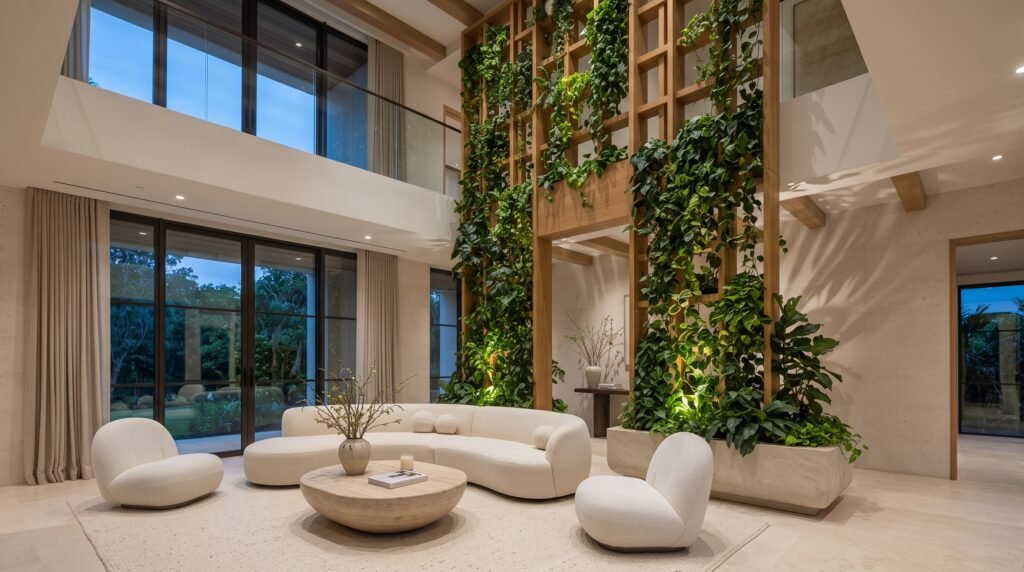
18. Create a Luxury Floor-to-Ceiling Living Trellis
For maximum impact, turn an entire vertical section into an architectural plant feature.
Start with a beautifully designed floor-to-ceiling framework in warm oak or refined dark metal. Integrate a substantial planter at the base and allow greenery to climb through the structure.
Instead of creating a completely dense green wall, leave portions of the framework visible. This preserves the architectural quality and makes the installation feel sophisticated.
Subtle integrated lighting can highlight selected leaves and cast gentle shadows across the surrounding surfaces.
Place the feature in a large living room, double-height space, or bright entrance hall where it has enough visual breathing room.
Combine it with sculptural furniture, natural stone, warm wood, linen, and restrained accessories.
Luxury Floor-to-Ceiling Indoor Living Trellis
Best Materials for an Indoor Trellis
The material you choose affects both the appearance and practicality of the trellis.
Natural wood is one of the easiest options to integrate into a home. Oak, bamboo, and other suitable woods introduce warmth and pair beautifully with greenery. Pale wood tends to feel Scandinavian and organic-modern, while darker stains create a richer look.
Metal provides a cleaner, more contemporary aesthetic. Thin black metal produces graphic contrast, while brass or bronze tones can feel softer and more luxurious.
Wire systems are excellent when you want the plant rather than the support to dominate visually. They can be particularly effective for minimalist interiors.
Whatever material you choose, consider the mature weight and growth habit of the plant. A delicate framework that works for a lightweight vine may not be suitable for a much heavier plant later.
Moisture also matters. Watering plants can expose nearby materials to humidity and occasional spills, so choose finishes that can tolerate the environment.
Choosing Plants for an Indoor Trellis
Not every houseplant naturally wants to climb in the same way.
Some plants climb using aerial roots, while others twine around supports or simply need to be gently trained and attached.
Popular indoor plants that may work with appropriate support include certain pothos varieties, heartleaf philodendrons, climbing philodendrons, hoyas, and some monstera species.
However, the best choice depends on the light, humidity, temperature, and available space in your home.
Before buying a plant solely for its appearance, research its mature size and growing requirements.
A plant that prefers very bright indirect light may struggle on a dark hallway trellis, regardless of how attractive the location looks.
The healthiest trellis displays begin by matching the plant to the environment rather than forcing a plant into an unsuitable decorative location.
Where Should You Place an Indoor Trellis?
Natural light should be one of the first considerations.
A trellis near a bright window can work beautifully, but the exact distance depends on the plant. Some species tolerate lower light, while others need brighter conditions to maintain healthy growth.
Avoid assuming that every sunny window is ideal. Intense direct sunlight can damage the leaves of some indoor plants.
Also consider access.
You should be able to water, prune, clean, and train the plant without moving heavy furniture every time.
If the trellis is very tall, think about how you will safely reach the upper growth.
Air circulation is another consideration. Extremely dense foliage pressed tightly against a wall can make cleaning more difficult and may trap moisture.
Leaving some space between the plant and wall can help maintain a cleaner, lighter arrangement.
How to Make an Indoor Trellis Look Expensive
The difference between a trellis that feels like a garden accessory and one that looks like part of a high-end interior often comes down to restraint.
Start with materials that relate to the rest of the room. If you already have pale oak furniture, repeating pale oak in the trellis creates continuity.
Choose planters carefully. A large sculptural stone or ceramic planter often looks more intentional than several mismatched plastic pots.
Hide practical elements whenever possible without making plant care difficult. Excess cords, visible plastic saucers, and improvised ties can distract from the overall design.
Train the plant thoughtfully but do not make it unnaturally perfect. A little asymmetry creates a more relaxed organic appearance.
Lighting can also elevate the design. A nearby wall sconce or subtle architectural light can emphasize foliage and create attractive shadows after sunset.
Finally, leave negative space. Luxury interiors often feel sophisticated because every surface is not completely filled.
Indoor Trellis Ideas for Small Spaces
Small homes can benefit enormously from vertical greenery.
Instead of using several floor plants, create one concentrated vertical feature. A narrow trellis may occupy very little floor area while providing greenery across several feet of wall.
Place it behind a compact bench, beside a desk, or near a window.
In small rooms, lighter materials generally feel less intrusive. Pale oak, thin metal, and wire systems allow the wall to remain visually open.
Avoid excessively dense foliage if the room already receives limited daylight.
You can also choose a trellis with a planter integrated into the base. This reduces the number of separate objects and keeps the composition tidy.
How to Style Around an Indoor Trellis
Because greenery introduces natural color and irregular shapes, surrounding decor should usually remain relatively calm.
Cream, beige, taupe, warm white, and natural wood make excellent companions.
Use tactile materials such as linen, wool, boucle, ceramic, stone, and woven fibers to strengthen the organic feeling.
Curved furniture also complements climbing plants beautifully. Rounded chairs and tables provide a softer contrast to the grid structure of a trellis.
Avoid placing too many small decorative objects around the feature. The trellis itself functions almost like artwork.
If you want additional wall decor, choose one substantial piece rather than several small frames.
Common Indoor Trellis Mistakes to Avoid
One common mistake is selecting a trellis based entirely on appearance without considering the plant.
The structure must work with the plant’s growth habit and eventual size.
Another mistake is choosing a location with unsuitable light. Even the most beautiful trellis will not remain attractive if the plant struggles.
Avoid letting plants become so dense that air cannot circulate or that walls become difficult to inspect and clean.
Water carefully around wood floors, walls, and furniture. Use appropriate planters and protection to prevent moisture damage.
Do not attach a heavy trellis to a wall with inadequate fixings. The mature plant, wet growing medium, planter, and support system can become heavier than expected.
Finally, resist the urge to cover every available section with greenery. Visible framework and negative space can be just as important as foliage.
How to Keep Your Indoor Trellis Beautiful
An indoor trellis is a living feature, so it will continually change.
Regularly guide new growth toward areas where you want more coverage. Remove damaged or yellowing foliage and prune the plant when necessary for its species.
Clean the trellis periodically because dust can accumulate on both the framework and leaves.
Rotate or adjust nearby pots when appropriate so growth remains balanced.
Inspect ties and supports as stems become larger. Something that was loose when a plant was young can become restrictive later.
Most importantly, respond to the plant rather than forcing it into a perfectly fixed design.
A healthy, slightly irregular plant usually looks much more beautiful than one that has been excessively manipulated simply to create symmetry.
Final Thoughts
Indoor trellises offer a creative way to bring greenery into the architecture of a home rather than treating plants as isolated accessories.
A light oak wall trellis can transform a simple living room, while an integrated planter and trellis creates a polished vertical garden feature. An arched trellis can introduce softness, and a freestanding design can add greenery while maintaining openness in an open-plan room.
For smaller homes, narrow wall-mounted or wire trellises provide vertical impact without consuming valuable floor space. In larger interiors, a floor-to-ceiling living trellis can become an extraordinary architectural focal point.
The most successful indoor trellis designs balance three things: the needs of the plant, the proportions of the room, and the overall interior style.
Choose a location with appropriate light, select a support system suited to your plant, and coordinate the trellis material with the surrounding furniture and finishes.
With thoughtful planning, a simple climbing plant and beautiful framework can turn an ordinary blank wall into a living feature that becomes more interesting as it grows.