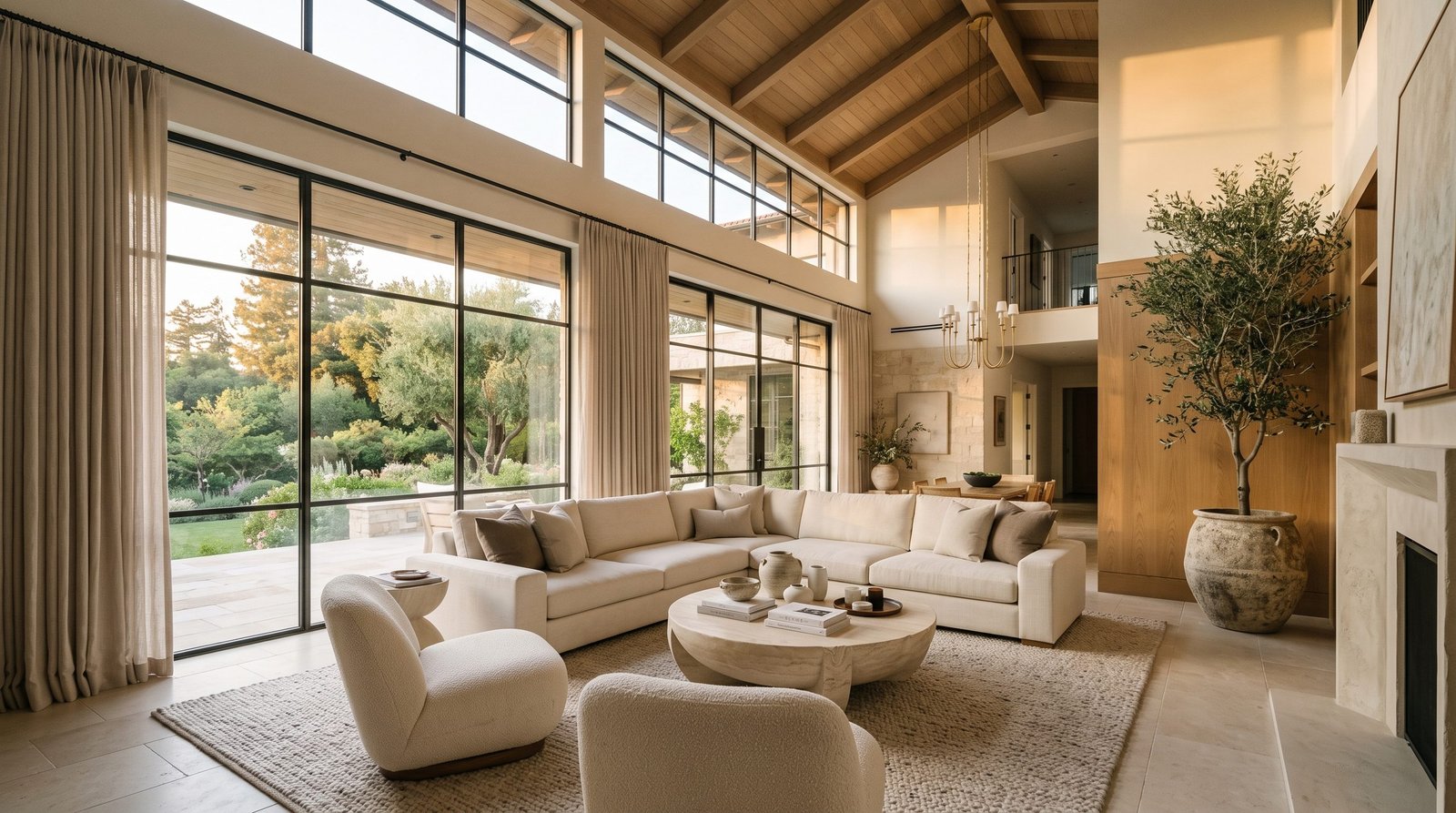
Interior Clerestory Window Ideas: 8 Beautiful Ways to Bring More Natural Light Indoors
Natural light can completely transform the way an interior feels. A room that once seemed dark, narrow, or enclosed can suddenly become brighter and more inviting when daylight is introduced in the right way. While large floor-to-ceiling windows are often the first solution that comes to mind, they are not always practical. Privacy, limited wall space, neighboring buildings, furniture placement, and architectural restrictions can all make traditional windows difficult to use.
That is where clerestory windows become especially useful.
Clerestory windows are positioned high on a wall, typically above normal eye level and often close to the ceiling. Their elevated placement allows sunlight to enter while preserving privacy and keeping valuable lower wall space available for furniture, artwork, shelving, or storage.
Once associated mainly with historic churches and large public buildings, clerestory windows have become an increasingly attractive architectural feature in contemporary homes. Modern versions can be sleek and minimal, warm and organic, dramatic and industrial, or even softly traditional.
Whether you are designing a living room, bedroom, hallway, bathroom, home office, or another difficult-to-light space, these eight interior clerestory window ideas show how high-level glazing can create brighter and more visually interesting interiors.
1. Create a Row of Clerestory Windows in the Living Room
Modern living room with a horizontal row of clerestory windows
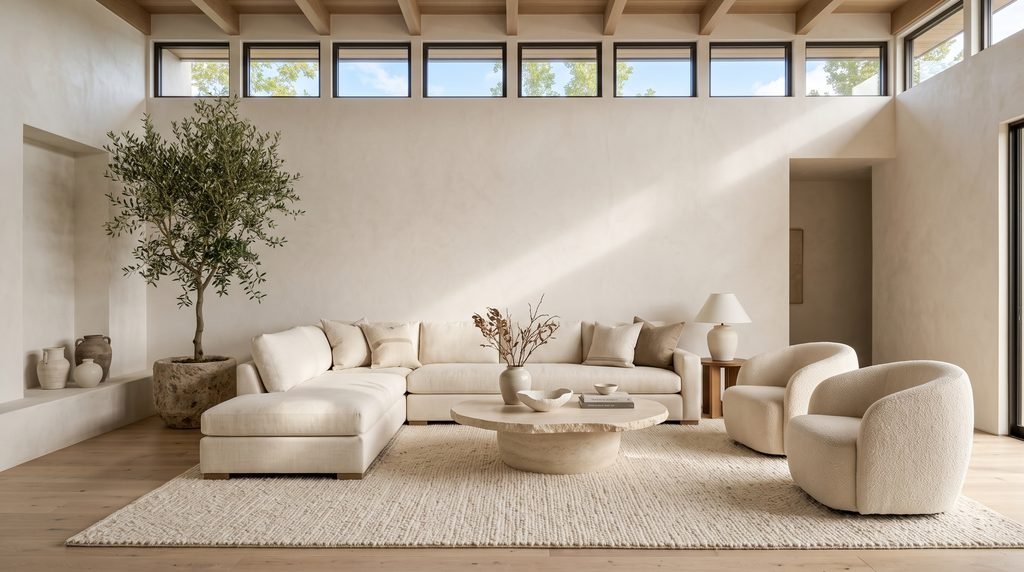
One of the most impressive ways to use clerestory windows is to install a continuous row along the upper section of a living room wall.
Rather than relying on one large conventional window, several smaller windows placed close together can distribute daylight across a wider area. The effect is especially beautiful in living rooms with tall ceilings, vaulted architecture, or long walls that might otherwise feel visually heavy.
For an organic-modern interior, consider slim clerestory windows with simple frames against warm white or soft cream walls. Pair them with pale oak flooring, an ivory sectional sofa, textured linen upholstery, a natural stone coffee table, and subtle greenery.
The high windows naturally draw the eye upward, making the ceiling appear taller and the entire room feel more spacious.
Another advantage is the amount of usable wall space that remains below the windows. A traditional window often determines where furniture can be positioned. With clerestory glazing, however, you can place a sofa, console, artwork, or built-in cabinetry underneath without significantly blocking the incoming daylight.
For a particularly refined appearance, align the window frames with other architectural details in the room. Consistent proportions between doors, shelving, ceiling beams, and windows help the feature feel intentional rather than added as an afterthought.
During the day, the windows become understated architectural details. As sunlight moves across the walls and floor, however, they create changing patterns of light that make a neutral interior feel dynamic.
2. Use Clerestory Windows Above a Bedroom Headboard
Serene neutral bedroom with clerestory windows above the bed
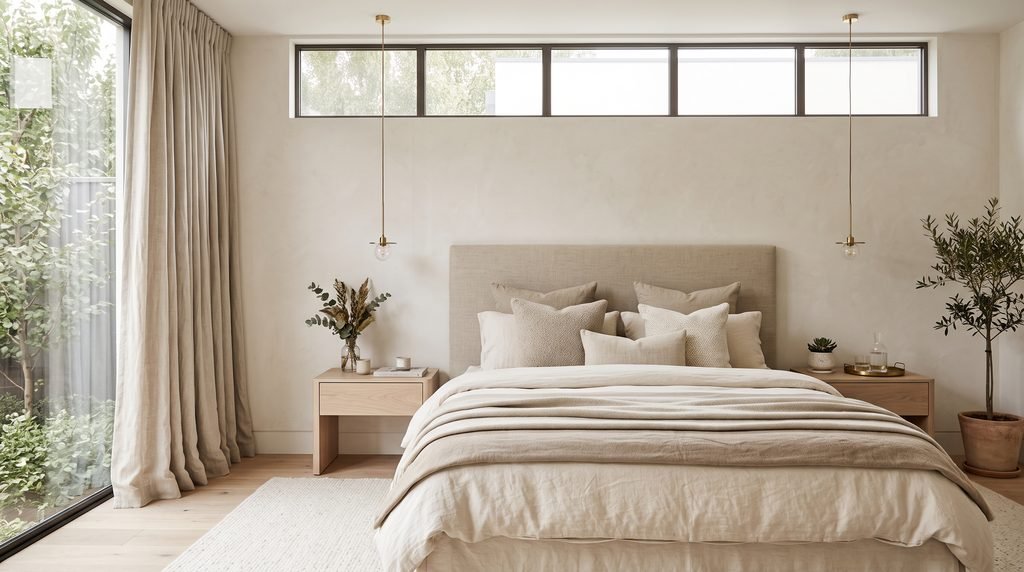
Bedrooms require a careful balance between natural light and privacy. Large windows can provide wonderful daylight, but they may also require heavy curtains or blinds, particularly when neighboring homes are close.
Placing clerestory windows above the headboard offers an elegant alternative.
Because the glazing sits above eye level, the bedroom can receive natural light without exposing the sleeping area to direct outside views. This makes the idea particularly useful for compact urban homes, ground-floor bedrooms, or properties with limited setbacks.
A horizontal arrangement of narrow windows above a low upholstered bed can also act almost like an architectural headboard.
Keep the surrounding design quiet so the windows remain part of the architecture rather than competing with excessive decoration. Warm white plaster walls, oatmeal linen bedding, a soft beige upholstered bed, light oak nightstands, understated pendant lights, and an ivory rug can create a soothing foundation.
The direction of the windows is worth considering carefully. Depending on the orientation of the room, direct early-morning or late-afternoon sunlight may enter at certain times. Frosted glazing, solar-control glass, or discreet shades can provide additional control when necessary.
You can also combine clerestory windows with a deeper window reveal. This creates beautiful shadows around the openings and gives even simple rectangular windows a more substantial architectural presence.
The result is a bedroom that feels private and protected without becoming dark or enclosed.
3. Add Clerestory Windows to a Dark Hallway
Minimal hallway illuminated by high clerestory windows
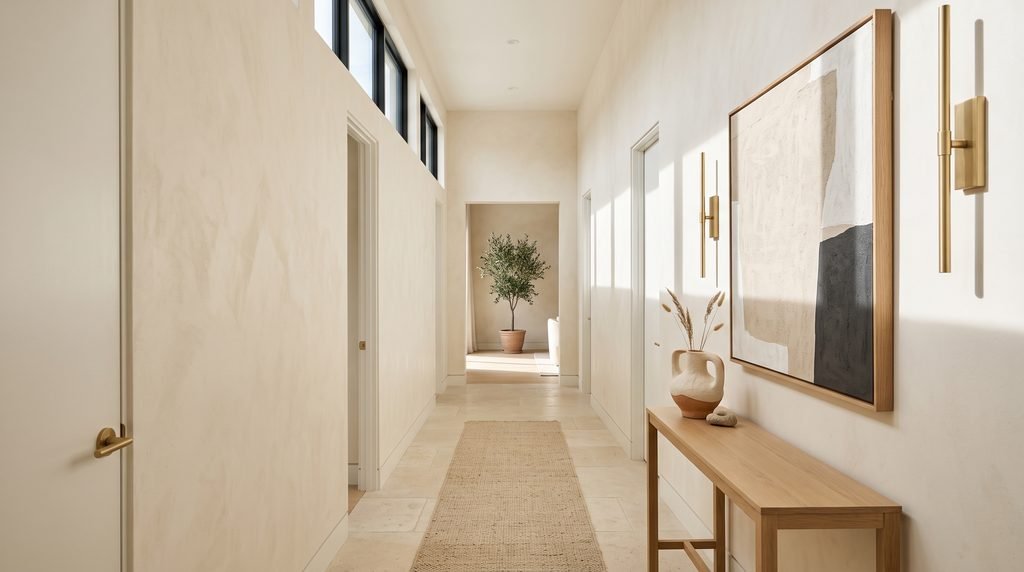
Hallways are some of the most frequently overlooked spaces when planning natural light. Since they are often located toward the center of a home, they may have few opportunities for standard exterior windows.
Clerestory glazing can dramatically improve these transitional spaces.
A series of high windows along one side of a hallway can wash the wall and floor with daylight while maintaining privacy. In narrow corridors, this can make the space feel significantly less confined.
Keep the design simple to emphasize the effect of the light.
Warm plaster walls, pale limestone or oak flooring, subtle wall sconces, and one carefully selected piece of artwork can be enough. If the hallway is wide enough, a slim wooden console and sculptural ceramic vessel can add warmth without creating clutter.
Another interesting option is to place clerestory windows above internal partitions. Instead of bringing light directly from outdoors, these windows can borrow daylight from an adjacent room.
For example, if a hallway runs beside a bright living space, glazed openings close to the ceiling can allow some of that light to filter into the corridor.
Reeded or fluted glass works particularly well when you want light transmission without clear views between rooms.
At night, thoughtfully positioned wall lights can emphasize the same architectural rhythm created by the windows during the day.
This approach turns an ordinary passageway into a deliberate part of the home’s architecture.
4. Combine Clerestory Windows With a Vaulted Ceiling
High-end living space with vaulted ceiling and clerestory glazing
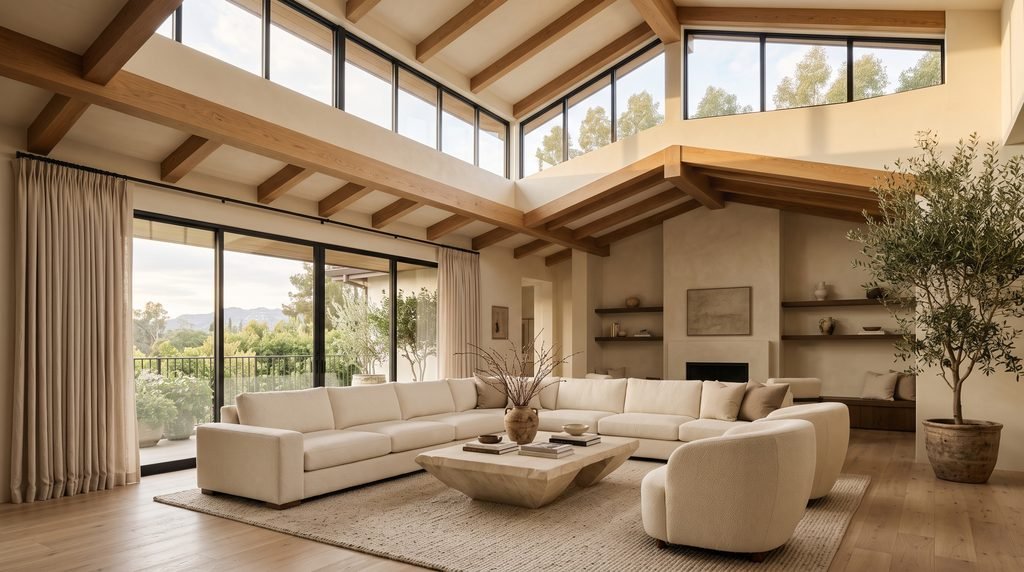
Few combinations are as dramatic as a vaulted ceiling paired with clerestory windows.
Tall ceilings create impressive volume, but they can sometimes leave the upper walls looking empty. Strategically positioned glazing fills that unused area while introducing daylight from a higher angle.
This is especially effective in open-plan living spaces.
Imagine a softly vaulted ceiling finished in warm white plaster with exposed natural oak beams. Beneath it, large clerestory windows bring daylight into a calm living room furnished with a cream sectional, sculptural lounge chairs, a limestone coffee table, and an oversized textured rug.
The windows highlight the height of the architecture rather than simply functioning as openings in the wall.
They can also help illuminate areas farther from conventional windows. Because daylight enters from above, it can reach deeper into the interior and reduce the visual contrast between bright window zones and darker central spaces.
Window shape can follow the roofline for an even stronger architectural effect. Triangular, trapezoidal, or angled clerestory glazing can echo a pitched ceiling, while rectangular windows provide a cleaner contemporary look.
For homes surrounded by attractive scenery, high glazing can occasionally frame treetops or sky rather than neighboring buildings. This creates a subtle connection with nature without sacrificing privacy.
The result can feel spacious, peaceful, and distinctly architectural.
5. Try Frosted Clerestory Windows for a Private Bathroom
Spa-inspired bathroom with frosted high-level windows
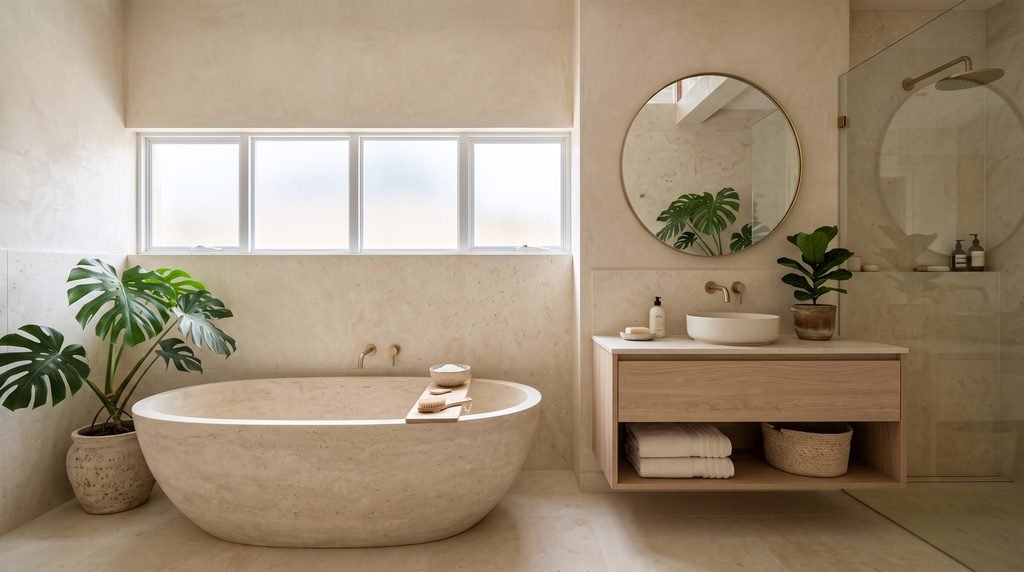
Bathrooms are ideal locations for clerestory windows because privacy is particularly important.
Instead of covering a conventional window with blinds throughout the day, high-level glazing can provide generous natural light while keeping direct sightlines away from the room.
For even greater privacy, use frosted or textured glass.
A luxurious bathroom might feature a freestanding stone bathtub beneath a row of softly frosted clerestory windows. Warm limestone flooring, creamy microcement walls, light oak cabinetry, brushed brass fixtures, and a few restrained natural accessories can create a sophisticated spa-like environment.
When daylight passes through translucent glass, it becomes softer and more diffused. This can be especially flattering in bathrooms because it minimizes harsh glare and creates a calm atmosphere.
Clerestory windows can also work beautifully in shower areas.
A narrow horizontal window positioned close to the ceiling can illuminate a walk-in shower without requiring clear glass at eye level. Waterproof detailing, ventilation requirements, and appropriate glazing specifications should, of course, be considered during construction.
For an organic touch, place a moisture-tolerant plant or a small indoor tree near the incoming light where conditions permit.
Instead of feeling closed off for privacy, the bathroom remains bright, serene, and connected to daylight.
6. Choose Black-Framed Clerestory Windows for Modern Contrast
Contemporary neutral interior with black-framed clerestory windows
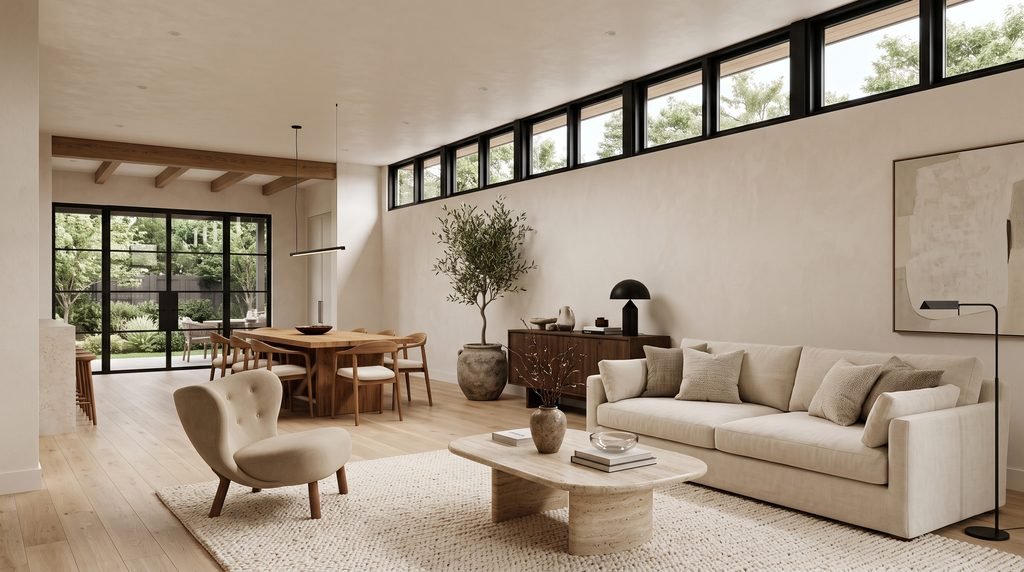
Not every clerestory design needs to disappear into the architecture. Sometimes the window frames themselves can become a decorative feature.
Slim black frames create striking contrast against cream, beige, or warm white walls.
This style works particularly well in contemporary, industrial-inspired, and modern-organic interiors. The dark lines give the architecture definition while the elevated windows keep the room feeling open and bright.
Consider a neutral living or dining room with a long band of black-framed clerestory windows positioned just beneath the ceiling. Continue the dark accents subtly through thin-framed doors, lighting fixtures, or small furniture details rather than repeating black everywhere.
The rest of the palette can remain warm and natural.
Cream upholstery, oak furniture, limestone surfaces, woven textiles, and greenery prevent the dark window frames from making the room feel severe.
Grid-style clerestory windows can introduce additional character, although simpler frames usually suit minimalist interiors better.
The key is proportion. Heavy frames can visually dominate small windows, whereas slim profiles tend to create a more elegant result.
Black-framed clerestory windows are particularly effective when sunlight is strong because the crisp silhouettes of the frames become part of the room’s changing light and shadow throughout the day.
7. Use Interior Clerestory Windows Between Two Rooms
Interior clerestory glazing connecting a bright living room and hallway
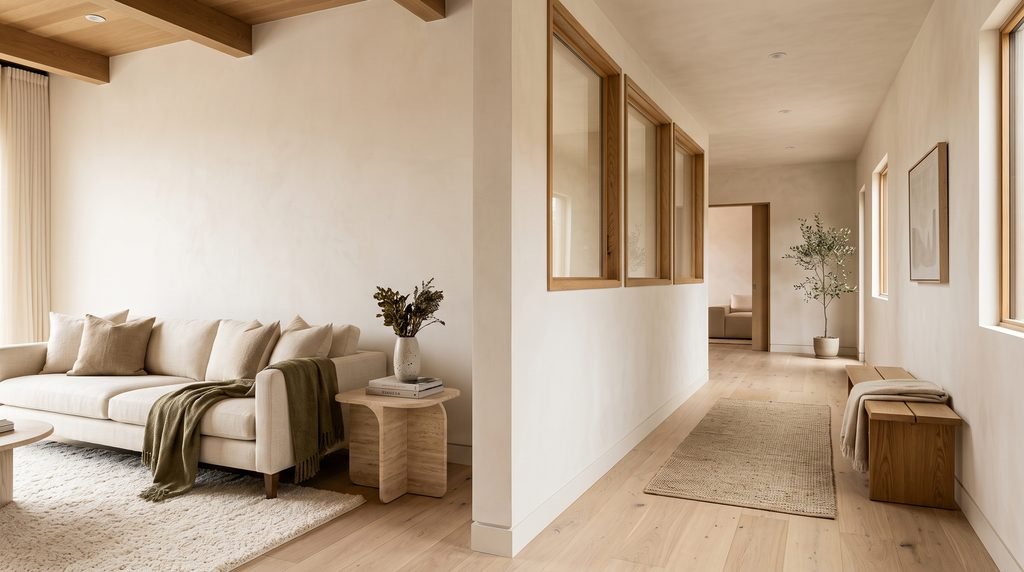
Clerestory windows do not have to face outdoors.
Interior clerestory glazing can be an ingenious way to share daylight between rooms while maintaining separation.
Suppose a home office sits beside a bright living room but does not have an exterior window of its own. Adding a horizontal glazed opening near the ceiling of the dividing wall can allow borrowed light into the office while preserving privacy and usable wall space.
The same technique can work between a hallway and living room, bedroom and dressing area, stairwell and corridor, or entryway and adjacent room.
Clear glass maximizes both light and visual connection, while frosted, fluted, or reeded glass provides greater privacy.
For a softer contemporary appearance, use warm oak framing. For a sharper architectural style, slim black metal frames can create a sophisticated contrast.
You can also create several evenly spaced openings instead of one continuous window. Repeated rectangular clerestory windows produce a strong architectural rhythm that can make an ordinary partition wall much more interesting.
This solution is particularly useful in renovations where adding a new exterior window is difficult or impossible.
Borrowing existing daylight rather than creating a completely new external opening can help darker internal spaces feel more connected to the rest of the home.
8. Create a Dramatic Floor-to-Ceiling Window Composition
Luxury living room combining tall glazing with clerestory windows
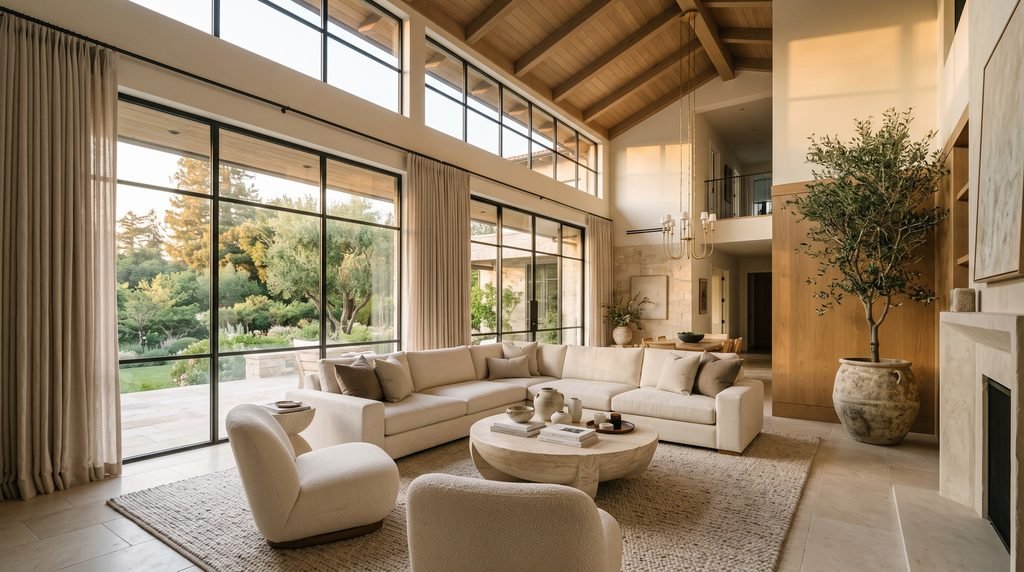
For a more dramatic interpretation, combine clerestory windows with larger windows or glazed doors below.
Instead of treating the clerestory as an isolated feature, the entire wall can become a carefully composed arrangement of glass.
In a luxury living room, tall windows or sliding doors might occupy the lower section of the wall, while a row of clerestory panes continues above them toward the ceiling. The additional upper glazing emphasizes height and creates an impressive connection between the interior, sky, and surrounding landscape.
This approach is especially effective in rooms with double-height or unusually tall ceilings.
Keep the frames visually consistent so the different windows read as one architectural composition.
Inside, avoid overcrowding the glass wall with tall furniture. A low cream sectional, curved boucle chairs, a substantial stone coffee table, a large ivory rug, and one sculptural olive tree can provide enough visual interest while keeping attention on the architecture.
Floor-to-ceiling oatmeal linen curtains can soften extensive glazing when necessary. If the clerestory section sits above the curtain track, however, daylight can continue entering even when the lower curtains are closed.
During golden hour, upper windows can capture warm sunlight and cast it farther into the room. In the evening, they may reveal changing sky colors while maintaining the sheltered atmosphere of the interior.
It is a bold interpretation of the clerestory concept and works particularly well when the architecture itself is intended to be the main decorative feature.
How to Choose the Right Clerestory Window Style
Before deciding on a design, think beyond appearance.
The most successful clerestory windows respond to the architecture of the home, the direction of sunlight, privacy requirements, ventilation needs, and the way each room is used.
In a minimalist home, a continuous horizontal strip of frameless-looking glazing may feel appropriate. In an organic-modern interior, warm timber frames can connect the windows with oak floors, ceiling beams, and furniture. Industrial-inspired spaces may benefit from slim black metal framing.
Glass choice is equally important.
Clear glass provides maximum visibility and daylight. Frosted glass increases privacy. Reeded and fluted glass introduce texture while obscuring direct views. Solar-control or other performance glazing may be appropriate where heat gain or glare is a concern.
Consider what will be visible through the windows as well. A high window framing blue sky or leafy treetops can become a subtle piece of living artwork.
Styling a Room With Clerestory Windows
Because clerestory windows already create strong architectural interest, interiors containing them often benefit from restrained styling.
Avoid filling every available wall with decoration.
Instead, use a limited collection of larger, well-chosen elements. An oversized textured rug, substantial sofa, sculptural coffee table, large ceramic vessel, indoor tree, or single piece of abstract artwork can complement the architecture without competing with it.
Natural materials are particularly effective.
Oak, linen, wool, limestone, plaster, travertine, rattan, and handmade ceramics respond beautifully to changing daylight. Their textures become more noticeable as sunlight moves through the room.
A neutral color palette can enhance the effect further. Cream, ivory, warm beige, taupe, pale wood, and muted earthy shades reflect daylight gently and create the serene aesthetic often associated with contemporary clerestory interiors.
That does not mean color must be avoided entirely. Deep green cabinetry, rust-toned textiles, muted blue accents, or dark walnut furniture can provide depth while allowing the windows and natural light to remain central features.
Clerestory Windows in Small Homes
Clerestory windows are not reserved for large luxury residences.
In fact, they can be particularly useful in small homes because they solve several problems simultaneously.
A conventional window occupies wall space that might otherwise accommodate shelving, a wardrobe, desk, or sofa. By raising the glazing toward the ceiling, the lower portion of the wall remains functional.
High windows can also make a compact room feel taller.
The eye naturally follows the light upward, emphasizing vertical space rather than limited floor area.
For small bedrooms, offices, bathrooms, and narrow living rooms, one carefully positioned clerestory window may be enough to noticeably improve the atmosphere.
Interior clerestory glazing is another smart solution for compact floor plans. Rather than creating completely enclosed rooms with solid partitions, high glass openings can maintain privacy while allowing daylight to travel through several spaces.
Should Clerestory Windows Open?
Clerestory windows can be fixed or operable.
Fixed windows are generally chosen when the main goal is daylight. Their simpler construction can also create a clean architectural appearance.
Operable clerestory windows, however, can contribute to ventilation. Because warm air naturally rises, high-level openings may help release accumulated warm air when incorporated into a properly designed ventilation strategy.
Accessibility is an important consideration because the windows are positioned above normal reach.
Manual poles, remote-controlled mechanisms, or automated systems may be used depending on the design.
The appropriate option will depend on the room, climate, window size, building regulations, and overall ventilation strategy.
Common Clerestory Window Design Mistakes
One mistake is treating clerestory windows as purely decorative features without considering sunlight direction.
An opening that looks beautiful in architectural drawings may introduce uncomfortable glare or excessive heat if its orientation and glazing are not properly considered.
Another issue is poor proportion.
Tiny windows placed on a very large wall can appear disconnected, while oversized clerestory glazing may overwhelm a compact room. Window dimensions should relate to ceiling height, wall length, doors, and other architectural features.
Privacy should also be evaluated from both inside and outside the home. A window being high on the interior wall does not automatically guarantee complete privacy from every neighboring viewpoint.
Finally, avoid adding unnecessary decorative elements around the windows. Their strength often comes from simplicity.
Clean framing, thoughtful alignment, quality materials, and beautiful natural light usually provide more impact than elaborate trim.
Final Thoughts
Clerestory windows demonstrate that a window does not need to dominate an entire wall to transform a room.
By positioning glazing high above eye level, homeowners can introduce daylight while maintaining privacy and preserving valuable wall space. The concept can work in everything from narrow hallways and compact bedrooms to spa-like bathrooms and dramatic vaulted living rooms.
A row of living room clerestory windows can make a long wall feel lighter. Windows above a bedroom headboard can balance daylight and privacy. Hallway clerestories can brighten difficult internal areas, while vaulted-ceiling glazing emphasizes architectural height.
For bathrooms, frosted clerestory windows provide soft illumination without sacrificing privacy. Black-framed designs introduce contemporary contrast, while interior clerestory glazing allows daylight to move between rooms. And for homes with generous ceiling heights, combining large lower windows with upper clerestory glazing can create a spectacular wall of natural light.
The best designs are not simply about adding more glass. They are about controlling where light enters, what it illuminates, and how that light interacts with architecture and materials.
When thoughtfully positioned, clerestory windows can make an interior feel brighter, taller, calmer, and more connected to the changing daylight outside—while retaining the privacy and functionality that everyday living requires.