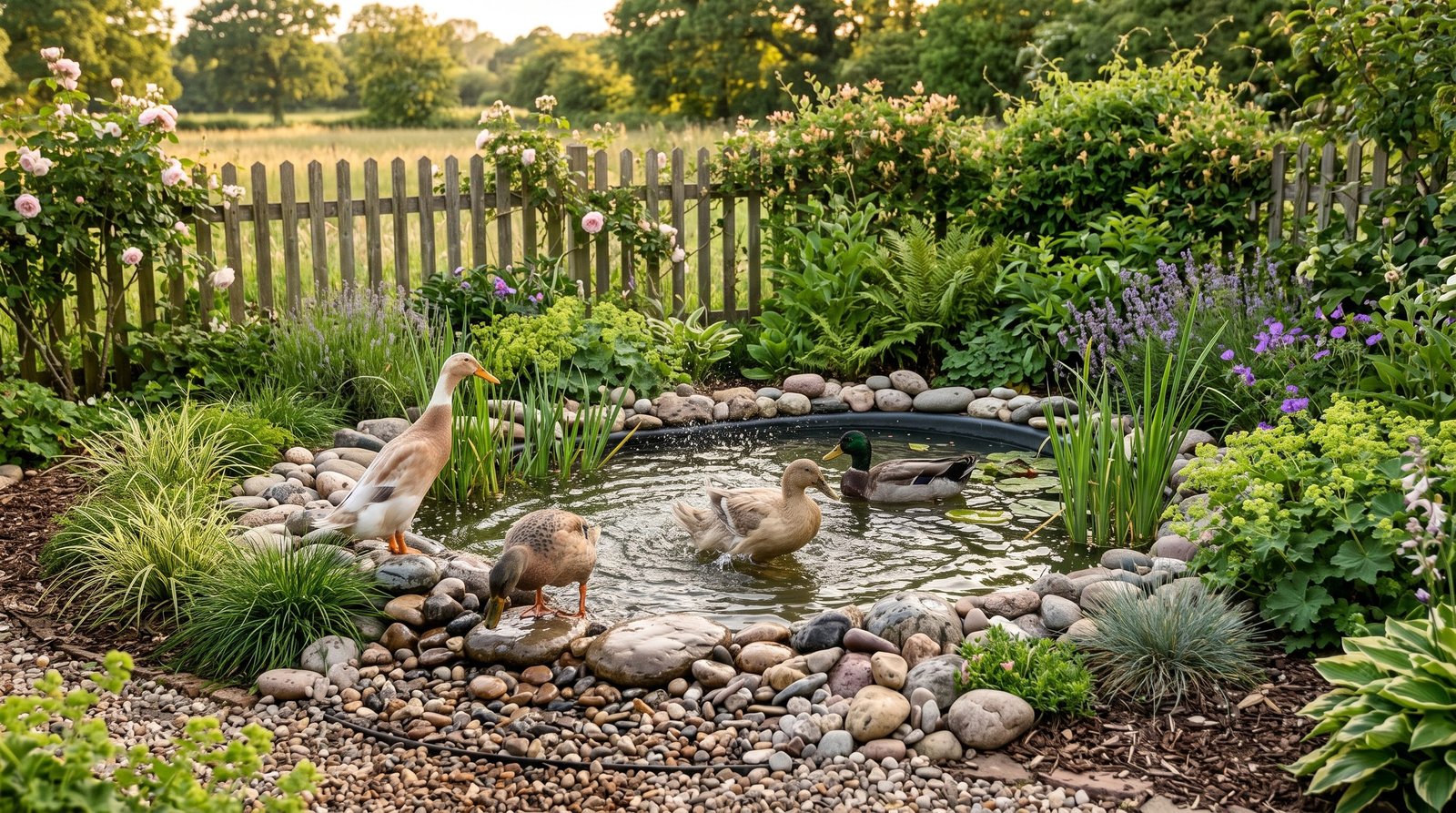
Duck Water Tub Ideas: 8 Practical and Beautiful Setups for Backyard Ducks
Keeping ducks in your backyard can be incredibly rewarding, but anyone who has spent time around ducks knows one thing very quickly: ducks absolutely love water. They splash in it, wash their bills, clean their feathers, cool themselves down, and somehow manage to turn a perfectly clean container into a muddy miniature pond within minutes.
Fortunately, you do not necessarily need a large traditional pond to give backyard ducks an enjoyable water area. A thoughtfully selected tub, basin, stock tank, or other sturdy container can provide a practical bathing area while being much easier to clean and maintain than a permanent pond.
The best duck water tub should be spacious enough for the ducks to splash comfortably, shallow enough to enter and exit safely, and durable enough to withstand frequent use. Drainage is another important consideration because duck water needs regular changing. A container that is difficult to empty can quickly turn a simple backyard setup into a frustrating chore.
Appearance matters too, particularly when your duck enclosure is part of a landscaped backyard. With natural stone, gravel, timber edging, plants, and thoughtful placement, even a basic water tub can become an attractive feature.
Whether you have a compact backyard duck run or a spacious country-style enclosure, these eight duck water tub ideas combine practicality with attractive outdoor design.
1. Large Ground-Level Duck Bath Tub
One of the simplest solutions is a large, shallow tub positioned directly at ground level. This setup works particularly well when you want something affordable, uncomplicated, and easy to clean.
Choose a sturdy container with enough width for your ducks to turn around and splash. Rather than choosing an unnecessarily deep container, prioritize usable surface area. Ducks need to be able to immerse their heads in water to help clean their eyes and nostrils, while a bathing container can provide enough additional depth for splashing and feather maintenance.
Setting the tub slightly into the ground can make the edge easier to approach. However, avoid creating a steep or slippery drop around it.
Surround the tub with smooth gravel or flat stones instead of bare soil. Ducks constantly carry water out on their feathers and feet, and a muddy area can quickly develop around frequently used tubs. A gravel perimeter helps water drain while creating a tidier appearance.
You can soften the surrounding space with duck-safe landscaping positioned far enough away that the plants are not immediately trampled.
Ground-Level Duck Water Tub
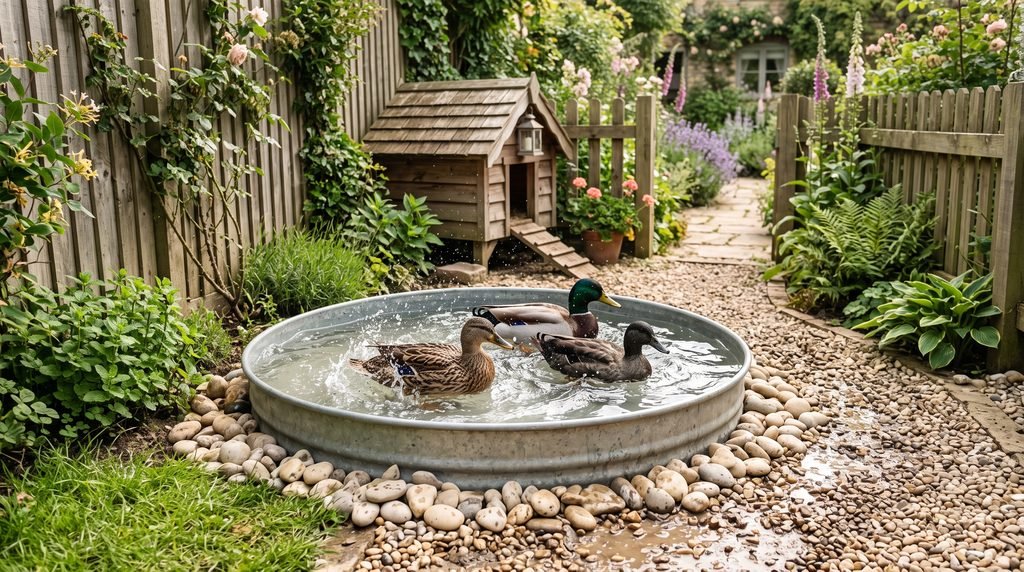
Show a spacious shallow tub partially recessed into a landscaped duck enclosure, surrounded by smooth gravel and natural stones.
A ground-level tub is particularly useful for duck keepers who want easy access for cleaning. Instead of dealing with complicated pumps or filtration systems, the water can simply be emptied, the tub scrubbed, and fresh water added.
If the container has slippery sides, adding a secure, textured entry point can make getting in and out easier.
2. Stock Tank Duck Pool
A stock tank can create a more substantial bathing area for a backyard flock. These sturdy containers are designed for outdoor use and are available in different dimensions, making it easier to select one appropriate for your space and ducks.
The biggest advantage of a stock tank is durability. Compared with lightweight temporary containers, a good-quality stock tank can become a long-term feature in the duck area.
The setup can also look surprisingly attractive.
Place the tank in a dedicated gravel zone and surround it with natural landscaping. Large rocks, ornamental grasses outside the ducks’ reach, timber fencing, and simple planting can help integrate the tank into the backyard rather than making it look randomly placed.
Accessibility is important. If the sides are high, provide a broad, stable, non-slip ramp or steps for entry and exit. Avoid steep ramps that become slippery when wet.
Stock Tank Pool for Ducks
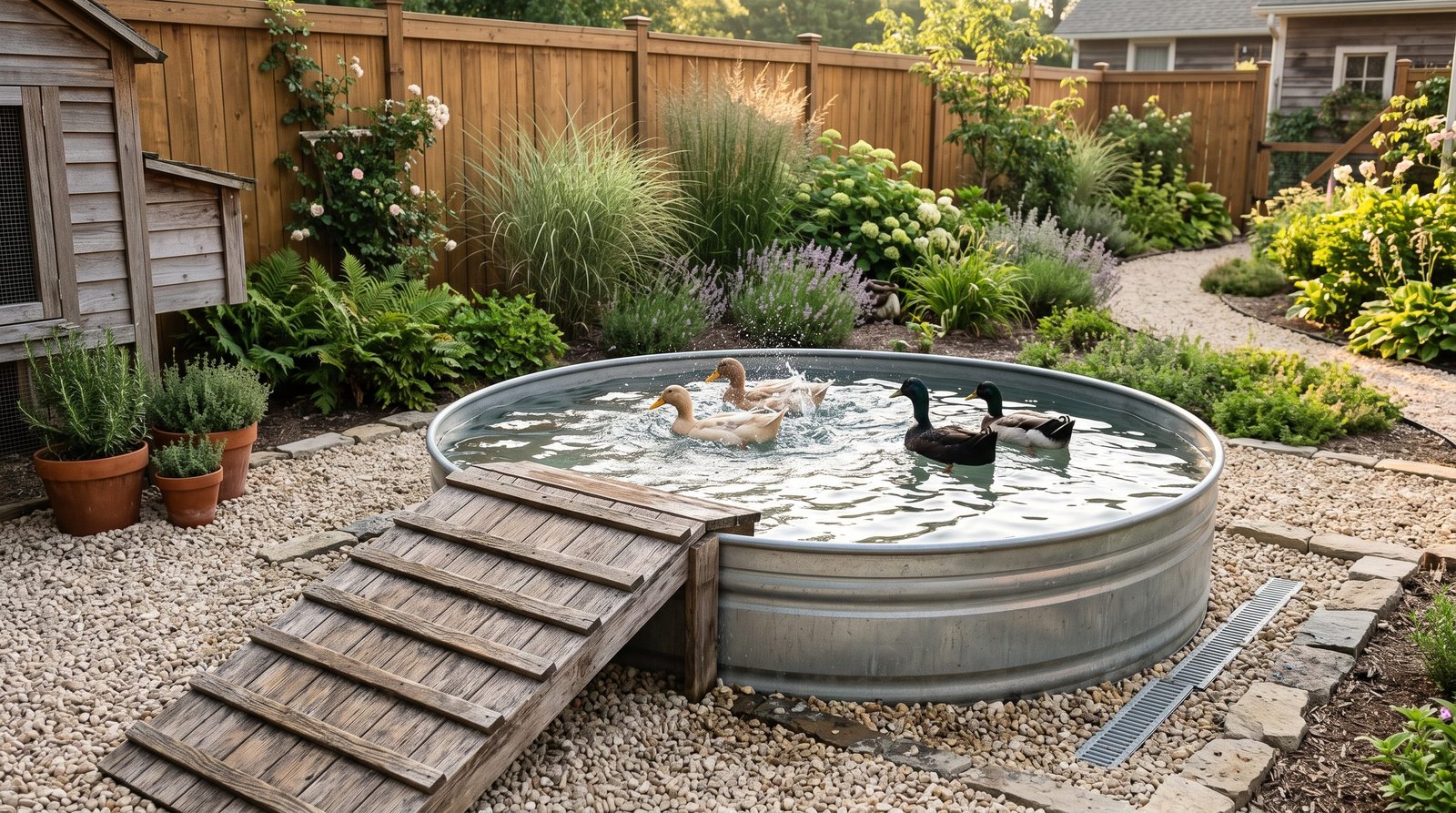
Show a stylish galvanized or dark stock tank in a spacious duck run with a secure ramp, gravel drainage area, timber fencing, and natural greenery.
Another major advantage is drainage. Selecting a tank with a convenient drain can make water changes considerably easier. Positioning the drainage outlet so used water can flow toward an appropriate garden drainage area can reduce the amount of lifting and tipping required.
Regular water replacement will still be necessary. Ducks introduce dirt, food particles, feathers, and mud into their bathing water very quickly, regardless of how attractive the setup initially looks.
3. Low Wide Basin for a Small Duck Area
Not every duck owner has space for a large pool. For a smaller enclosure, a low, wide basin can be a practical alternative.
The key is to choose width over excessive depth. A broad basin provides room for splashing and bathing while remaining relatively easy to empty.
This idea can also work well when keeping only a small number of ducks, provided the container offers appropriate access and enough space for the birds using it.
Choose a heavy-duty basin rather than a thin decorative planter. Duck tubs receive considerable wear from feet, bills, repeated cleaning, sunlight, and temperature changes.
Place the basin on a level foundation of compacted gravel or pavers. A stable base prevents the container from shifting and helps keep surrounding mud under control.
Small Backyard Duck Basin
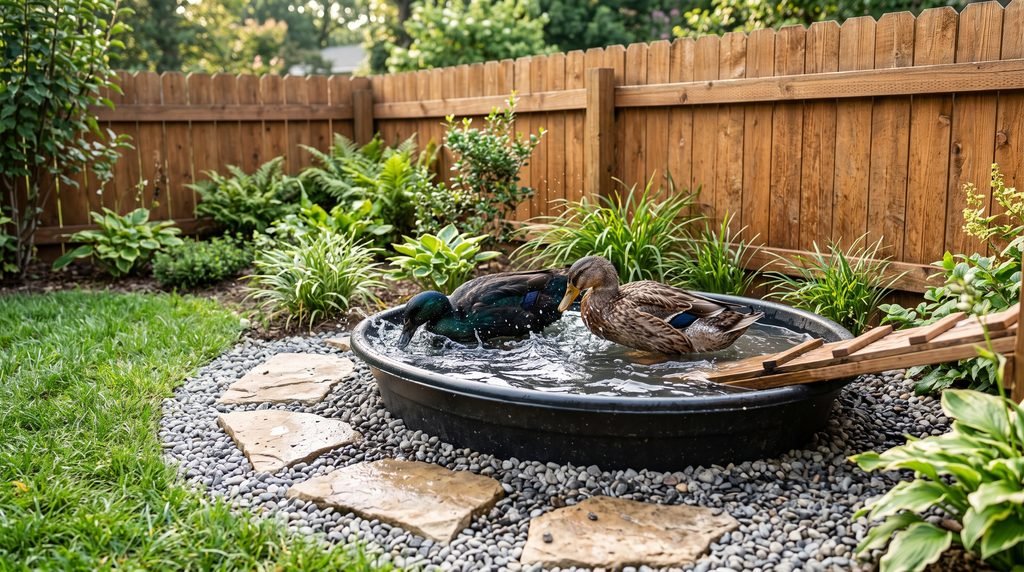
Show two ducks enjoying a broad low-profile water basin in a compact but clean backyard enclosure with pea gravel, stepping stones, and warm timber details.
A small basin is particularly convenient because it can be emptied frequently without complicated equipment. This can be a major advantage in warm weather, when dirty standing water can quickly become unpleasant.
You can also keep a second drinking-water container separate from the bathing basin. Ducks are likely to dirty both, but separating the two areas can make daily management easier.
4. Sunken Duck Tub with Natural Stone Edging
If you want a duck tub that blends into your landscaping, consider partially sinking a sturdy container into the ground and disguising the rim with natural materials.
The result can resemble a miniature garden pond without requiring construction of a permanent pond.
Choose a suitable heavy-duty tub and prepare a level opening in the ground. The surrounding soil should be stable, and the tub should remain accessible for draining and cleaning.
Smooth flat stones can be arranged around the outside to visually soften the rim. Gravel between the stones helps with drainage and creates a more natural transition from the enclosure to the water.
The landscaping does not need to be elaborate. In fact, simpler is usually easier around ducks. A restrained combination of stone, gravel, timber, and a few protected plants can produce an attractive rustic look.
Sunken Natural-Style Duck Tub
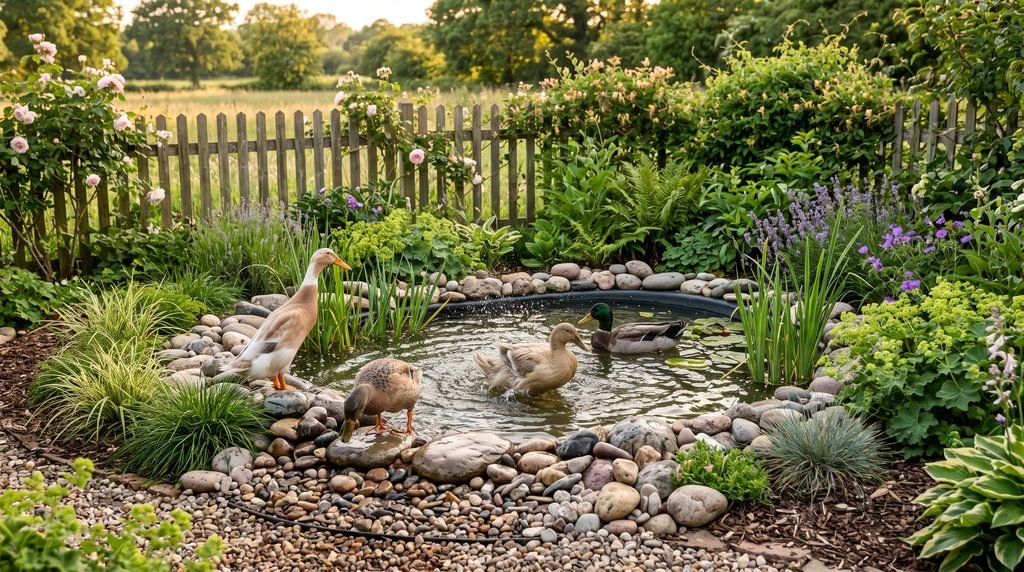
Show a partially sunken duck bathing tub designed to resemble a small natural pond, with smooth stones, gravel, grasses, and several ducks safely entering the water.
One advantage of this design is easy entry. Because the rim is close to ground level, ducks do not need to negotiate a tall container wall.
However, drainage should be planned before installation. A beautiful sunken tub becomes inconvenient if you need to scoop dirty water out manually every time it needs cleaning.
A drain, pump, siphon arrangement, or accessible installation can make routine maintenance significantly simpler.
5. Raised Duck Tub with a Gentle Ramp
Although ground-level containers are often easiest for ducks to access, a slightly raised tub can make drainage and cleaning easier for the owner.
A raised setup works especially well when the container has a drain near its base. Elevating it slightly can provide enough clearance to attach a hose or direct dirty water away from the enclosure.
The important part is providing safe access.
Build a broad ramp with a gentle slope and a textured, non-slip surface. The ramp should be sturdy enough that it does not shift when several ducks approach the water.
Avoid narrow decorative ramps. Ducks need enough width to walk naturally, particularly when their feet and the ramp are wet.
You can also create a small platform around part of the tub. This provides a stable standing area and can help prevent ducks from stepping directly from mud into clean water.
Raised Duck Water Tub with Ramp
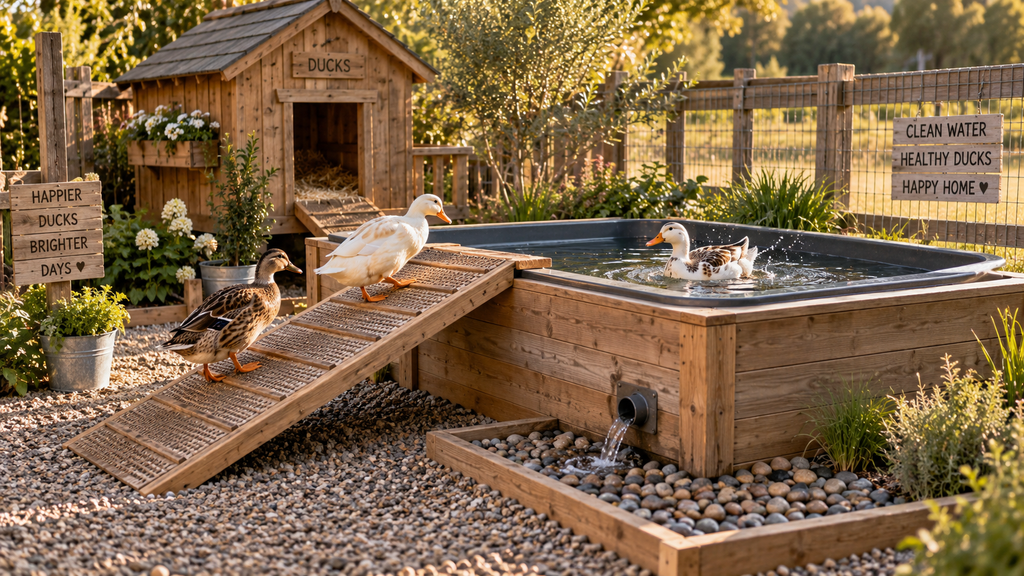
Show a sturdy slightly elevated duck pool with a wide textured wooden ramp, gravel underneath, clean drainage design, and a simple farmhouse-style duck enclosure.
From a design perspective, timber can make a plain container look more intentional. A simple wooden surround can coordinate with a duck house, fencing, or garden beds.
Make sure decorative framing does not obstruct access to the tub for cleaning. Every surface around duck water eventually gets wet and dirty, so removable or easily washable elements are preferable to complicated construction.
6. Repurposed Heavy-Duty Utility Tub
Repurposing can be an excellent option when you already have a suitable heavy-duty container available.
Large utility tubs, sturdy mixing tubs, and similar broad containers may work as duck bathing areas when they are made from appropriate non-toxic materials, have no sharp edges, and can be cleaned thoroughly.
Avoid using containers that previously held chemicals, pesticides, fuels, paint, or other potentially harmful substances. A cheap secondhand container is not worth using if its history is unknown or contamination is possible.
Once you have a safe container, presentation can make it look much more intentional.
Instead of dropping the tub onto bare soil, create a designated bathing station. Lay down gravel, add a few large flat stepping stones, and use simple timber edging to define the area.
Repurposed Utility Tub Duck Bath
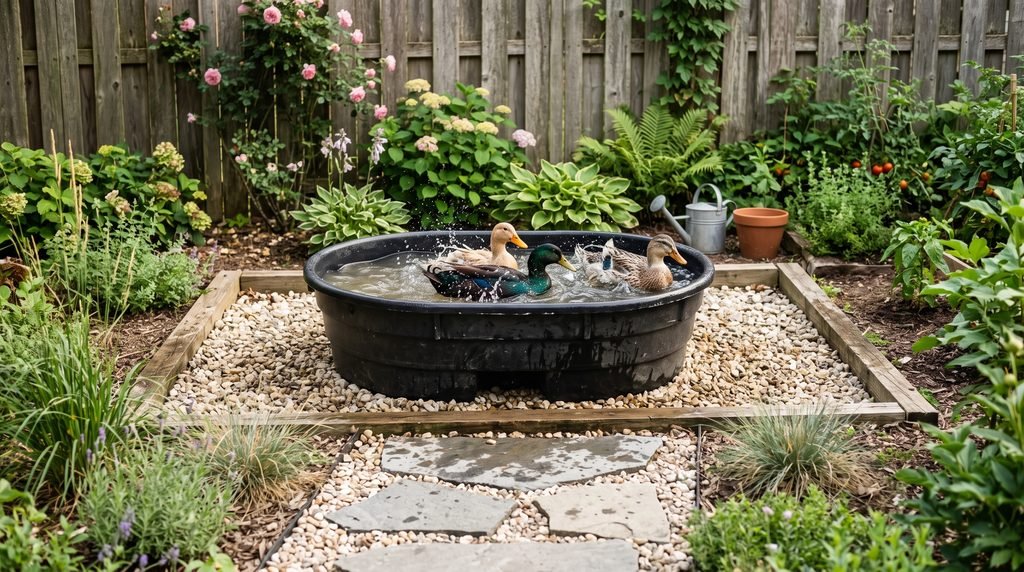
Show a large black heavy-duty utility tub transformed into an attractive duck bathing station with pale gravel, natural stepping stones, simple fencing, and green landscaping.
The dark color of many utility tubs can actually work beautifully in landscaped spaces because it visually recedes into the surroundings.
This is also one of the easiest setups to replace. If the tub eventually becomes damaged, you can remove it without dismantling an entire pond structure.
For renters or people experimenting with backyard duck keeping, a removable water setup can offer much more flexibility than permanent landscaping.
7. Duck Tub with a Dedicated Gravel Splash Zone
Sometimes the biggest problem is not the water container itself but everything around it.
Ducks enthusiastically splash water over the edges, walk through it, carry it on their feathers, and mix it with surrounding soil. Even an excellent tub can create a muddy mess when positioned directly on dirt.
A dedicated splash zone solves much of this problem.
Create a generously sized gravel area around the entire water tub rather than adding only a narrow strip along the edge. The zone should extend far enough to catch much of the water carried out by bathing ducks.
Depending on your site, the ground underneath may need appropriate grading or drainage preparation to prevent water from collecting.
Smooth, appropriately sized gravel is preferable to sharp material that may be uncomfortable underfoot.
Duck Bath with Gravel Splash Zone
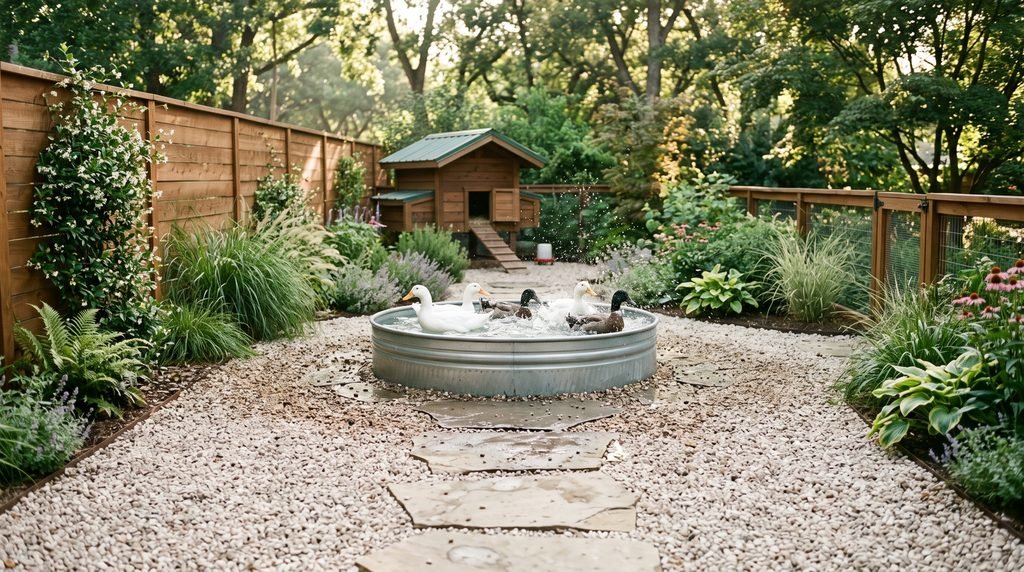
Show a thoughtfully designed duck enclosure with a large central bathing tub surrounded by an expansive clean gravel splash zone, timber fencing, shade, and natural garden planting.
The result can be dramatically easier to maintain than a tub sitting in grass or soil.
A defined gravel zone also makes the duck enclosure look organized. The bathing station becomes its own functional section, much like a patio area within a garden.
For an especially attractive layout, use larger flat stones as pathways through the gravel. This gives you a clean route to the tub when refilling or scrubbing it.
8. Shaded Duck Bath Station
During hot weather, the placement of the water tub can be just as important as its design.
A bathing area with reliable shade gives ducks a comfortable place to cool down while reducing prolonged exposure to intense direct sunlight. Depending on the yard, shade might come from a tree, roofed section of the enclosure, pergola-like shelter, or properly installed shade structure.
The water container itself can remain simple. A broad, durable tub positioned under an airy shelter can become an attractive and highly functional feature.
Make sure the shaded area remains well ventilated. The goal is protection from harsh sun, not a dark enclosed corner with poor airflow.
Shaded Duck Bathing Station
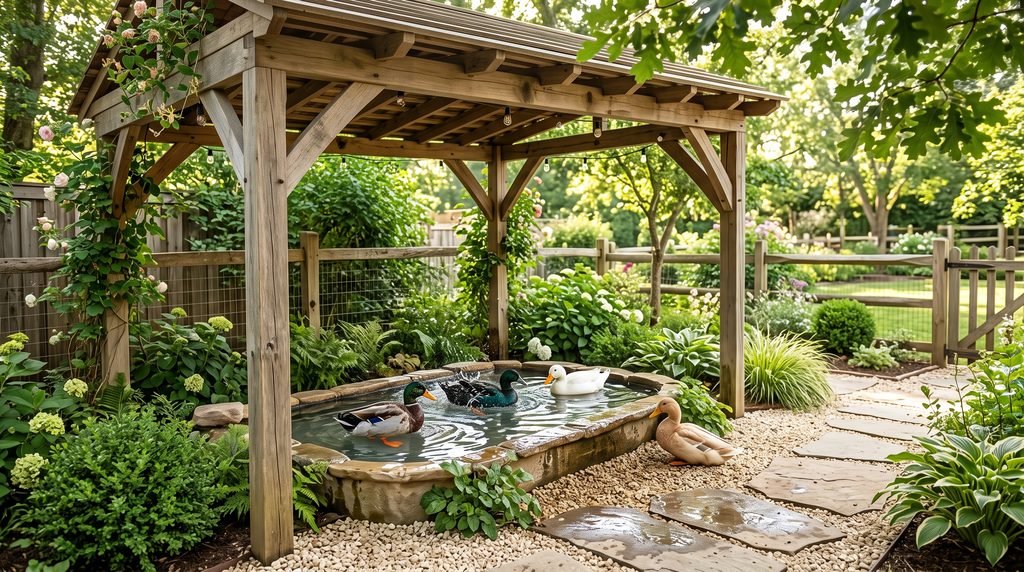
Show an elegant backyard duck bathing area beneath an open timber shade shelter, with a wide water tub, gravel flooring, natural greenery, and several relaxed ducks.
This concept is especially appealing when the duck enclosure is visible from a patio or garden. A simple timber shelter can visually connect the duck area with other outdoor structures.
Consider placing drinking water nearby but outside the main splash zone. Food, however, may be easier to manage away from the bathing tub because spilled feed combined with water can quickly create additional mess.
How to Choose the Right Water Tub for Your Ducks
The perfect container depends on your flock, available space, climate, and how much maintenance you are prepared to handle.
Start with accessibility. Ducks should be able to enter and leave the bathing container safely. Tall, smooth sides can be difficult to navigate, particularly for smaller ducks or birds with mobility limitations.
Next, think about durability. The tub will experience sunlight, water, mud, claws, cleaning brushes, and regular emptying. A strong container intended for outdoor use generally makes more sense than a fragile decorative one.
Surface area is another important factor. Ducks enjoy splashing and moving in the water, so a broad tub can be more useful than a narrow but very deep container.
Perhaps most importantly, consider how you will empty it.
When looking at a beautiful container in a shop, imagine it completely full of dirty water. If there is no drain and it is too large to tip safely, cleaning may become difficult. A drain near the bottom, an appropriate pump, or a manageable container size can save considerable effort.
Keeping a Duck Water Tub Cleaner
No duck bathing tub will remain perfectly clean. Mess is simply part of keeping water-loving birds.
The goal should therefore be easy cleaning rather than expecting the water to look like a decorative swimming pool.
Place bathing tubs away from loose soil whenever possible. Gravel, pavers, or another well-draining surface can reduce the amount of mud carried directly into the water.
Keeping food away from the main bathing area can also help reduce contamination from wet feed.
Regularly empty the tub and remove accumulated sediment. A smooth interior surface is particularly useful because it can be scrubbed much faster than a container filled with difficult corners and decorative details.
Fresh water should always be readily available, and drinking containers should be checked frequently because ducks naturally rinse their bills in water while eating.
Turn the Duck Bath into an Attractive Garden Feature
Practical does not have to mean unattractive.
The easiest way to make a duck tub complement a garden is to design the surrounding area rather than trying to disguise the container completely.
Start with a defined foundation. Gravel instantly makes many setups appear cleaner and more intentional. Add several large natural stones to break up the surface and create visual interest.
Timber fencing works particularly well with duck areas because it brings warmth and a rustic garden feel. For a more modern look, combine simple dark fencing with pale gravel and restrained planting.
Plants can soften the edges, but ducks are enthusiastic gardeners in their own way. They may nibble, flatten, dig around, or otherwise investigate accessible vegetation. Place valuable landscaping outside the main enclosure or protect it appropriately, and always verify that plants accessible to the ducks are safe for them.
A small tree or overhead structure can provide both visual height and useful shade.
The objective is not to create a perfectly styled space that cannot withstand animals. Instead, choose durable landscaping that still looks attractive when wet, muddy, and actively used.
Safety Considerations for Duck Water Tubs
Every duck setup should prioritize the birds over appearance.
Make sure the tub has a reliable way for ducks to exit. Smooth, steep-sided containers should not be used without appropriate access. Ramps and steps should have traction and remain stable when wet.
Regularly inspect tubs for cracks, broken plastic, exposed wire, sharp metal, or damaged edges.
Young ducklings require particularly careful water management. Their needs and abilities differ from those of healthy adult ducks, so bathing arrangements should be appropriate for their age and supervised as necessary.
Keep the surrounding surface as slip-resistant as practical, and avoid allowing deep mud to develop around entrances.
Water hygiene is equally important. A tub filled with heavily contaminated water should not simply be topped up indefinitely. Routine emptying, cleaning, and refilling is part of maintaining a healthier duck environment.
Final Thoughts
A large permanent pond is not the only way to give backyard ducks access to enjoyable bathing water. In many homes, a thoughtfully planned tub is actually more practical because it is easier to drain, scrub, refill, reposition, and incorporate into an existing enclosure.
A simple ground-level basin is excellent for easy maintenance, while a stock tank provides a more substantial bathing area. A sunken tub surrounded by stone can create a natural pond appearance, and a raised tub with a ramp can make drainage more convenient. Repurposed utility tubs provide an affordable alternative, while a dedicated gravel splash zone can solve one of the most frustrating problems associated with keeping ducks: mud.
For warmer backyards, creating a shaded bathing station combines water access with a comfortable place to escape strong sun.
Whichever approach you choose, focus first on safe access, clean water, effective drainage, sturdy materials, and straightforward maintenance. Once those essentials are covered, gravel, stone, timber, shade structures, and carefully chosen landscaping can transform a basic water container into a charming part of the backyard.
The most successful duck water area is not necessarily the biggest or most expensive. It is one that your ducks can use comfortably and that you can realistically keep clean. With a little planning, even a simple tub can become a functional bathing spot for your flock while fitting beautifully into the surrounding garden.